Introduction
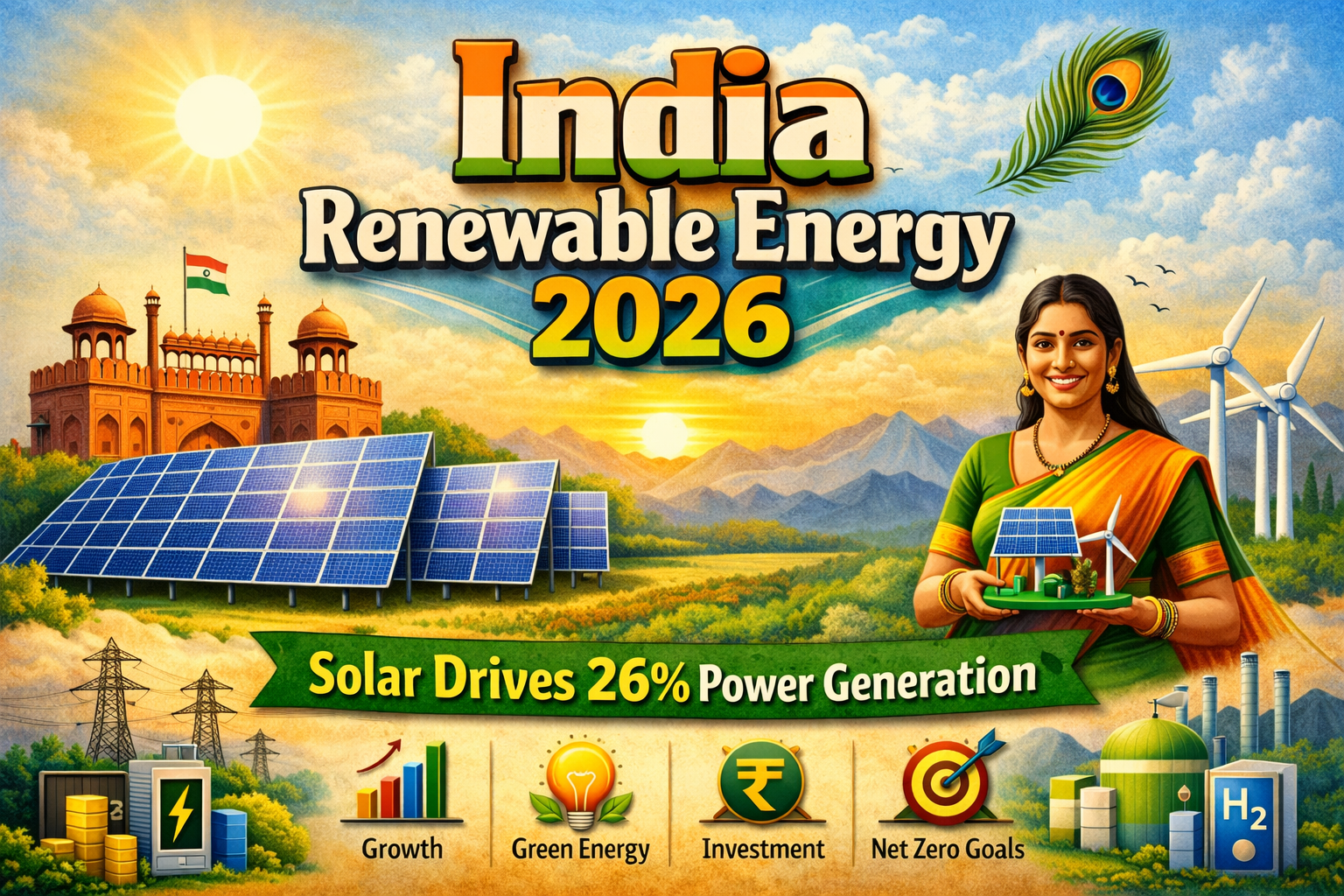
India’s renewable energy sector has reached a major milestone in 2026. According to recent data highlighted by Reserve Bank of India, clean energy now contributes over 26% of the country’s total electricity generation, marking a significant jump from previous years.
This growth reflects India’s strong push toward sustainability, reduced dependence on fossil fuels, and aggressive solar energy expansion. The latest update from The Times of India highlights how solar power is leading this transformation.
In this blog, we will break down the latest developments, key trends, challenges, and future outlook of India’s renewable energy sector.
Renewable Energy Share Crosses 26% in India
India’s renewable energy contribution has reached 26.4% of total electricity generation in FY 2025–26 (till January). This is a sharp increase from around 21% in 2019–20.
This growth shows:
- Strong policy support
- Massive solar capacity additions
- Increasing adoption of clean energy
After a slight dip in 2023–24, the renewable share rebounded and surged again in 2025–26, indicating strong momentum in the sector.
Solar Power: The Biggest Growth Driver
Solar energy has emerged as the main force behind India’s renewable expansion.
Key highlights:
- Solar contribution increased from 3.6% to 9% in total power generation
- Solar now accounts for 54% of total renewable capacity
- Installed solar capacity grew from 35 GW to 144 GW
- A record 38 GW of solar capacity added in one year
This rapid growth shows that solar energy is no longer just an alternative—it is becoming the backbone of India’s power sector.
India’s Total Renewable Capacity in 2026
As of February 2026:
- Total renewable capacity (including hydro): 267 GW
- Solar share: 144 GW
India is now among the top global leaders in renewable energy production.
Additionally, renewable energy capacity has expanded significantly over the last decade, contributing to nearly half of India’s installed power capacity.
Contribution of Other Renewable Sources
While solar leads the growth, other renewable sources also contribute:
Hydropower
- Largest contributor among renewables
- Slight decline in share due to solar growth
Wind Energy
- Stable contribution at 4–6%
Bioenergy
- Small but consistent contribution
This diversified energy mix ensures reliability and stability in the power sector.
Why Solar Energy is Growing So Fast in India
1. Government Policies & Subsidies
India’s government has launched multiple schemes:
- PM Surya Ghar Yojana
- PM-KUSUM
- Production Linked Incentive (PLI)
These initiatives have boosted solar adoption across residential, agricultural, and industrial sectors.
2. Falling Solar Costs
Solar power is now one of the cheapest sources of electricity in India.
- Tariffs as low as ₹2.5 per unit
- Lower installation costs
This affordability is driving mass adoption.
3. Rising Electricity Demand
India’s energy demand is increasing due to:
- Industrial growth
- Urbanization
- EV adoption
- Air conditioning demand
Renewables, especially solar, are helping meet this demand sustainably.
4. Private Sector Investments
Major companies are investing heavily in:
- Solar parks
- Manufacturing
- Rooftop solutions
This is accelerating capacity growth.
Record-Breaking Renewable Energy Expansion
India has been adding renewable capacity at an unprecedented pace.
- Over 44 GW added in 2025 alone
- Solar contributed the majority share
This growth reflects strong execution and policy support.
Additionally, renewable generation grew by 20% in 2025, one of the highest increases globally.
Challenges in India’s Renewable Energy Growth
Despite strong progress, several challenges remain:
1. Grid Infrastructure Issues
- Transmission limitations
- Solar power curtailment
2. Energy Storage Limitations
- Solar is intermittent
- Battery storage is still expensive
3. Policy Uncertainty
- State-level variations
- Changing regulations
4. Financing Barriers
- High upfront costs
- Loan approval issues
Future of Renewable Energy in India
India has ambitious targets:
- 500 GW renewable capacity by 2030
- Net-zero emissions by 2070
Future trends include:
- Solar + battery storage
- Hybrid projects (solar + wind)
- Green hydrogen
- Smart grids
Solar energy is expected to:
- Reach 18% share in electricity generation by 2030
- Become the dominant energy source
What This Means for Consumers & Businesses
For Homeowners
- Lower electricity bills
- Government subsidies
- Energy independence
For Businesses
- Reduced operational costs
- ESG compliance
- Long-term savings
For Investors
- Massive growth opportunity
- Expanding market
Conclusion
India’s renewable energy sector is entering a new phase of growth. With 26.4% of electricity now coming from clean sources, the country is making strong progress toward a sustainable future.
Solar energy is clearly leading this transformation, driven by:
- Rapid capacity expansion
- Falling costs
- Strong government support
However, to sustain this momentum, India must address key challenges like grid infrastructure and energy storage.
The future is clear—India is moving steadily toward becoming a global renewable energy powerhouse.