Introduction: Why Solar Adoption Still Faces Resistance
Solar energy has moved from being an alternative power source to becoming a central pillar of the global energy transition. Governments, corporations, and communities increasingly recognise solar power as a clean, renewable, and economically viable solution to rising energy demand and climate change.
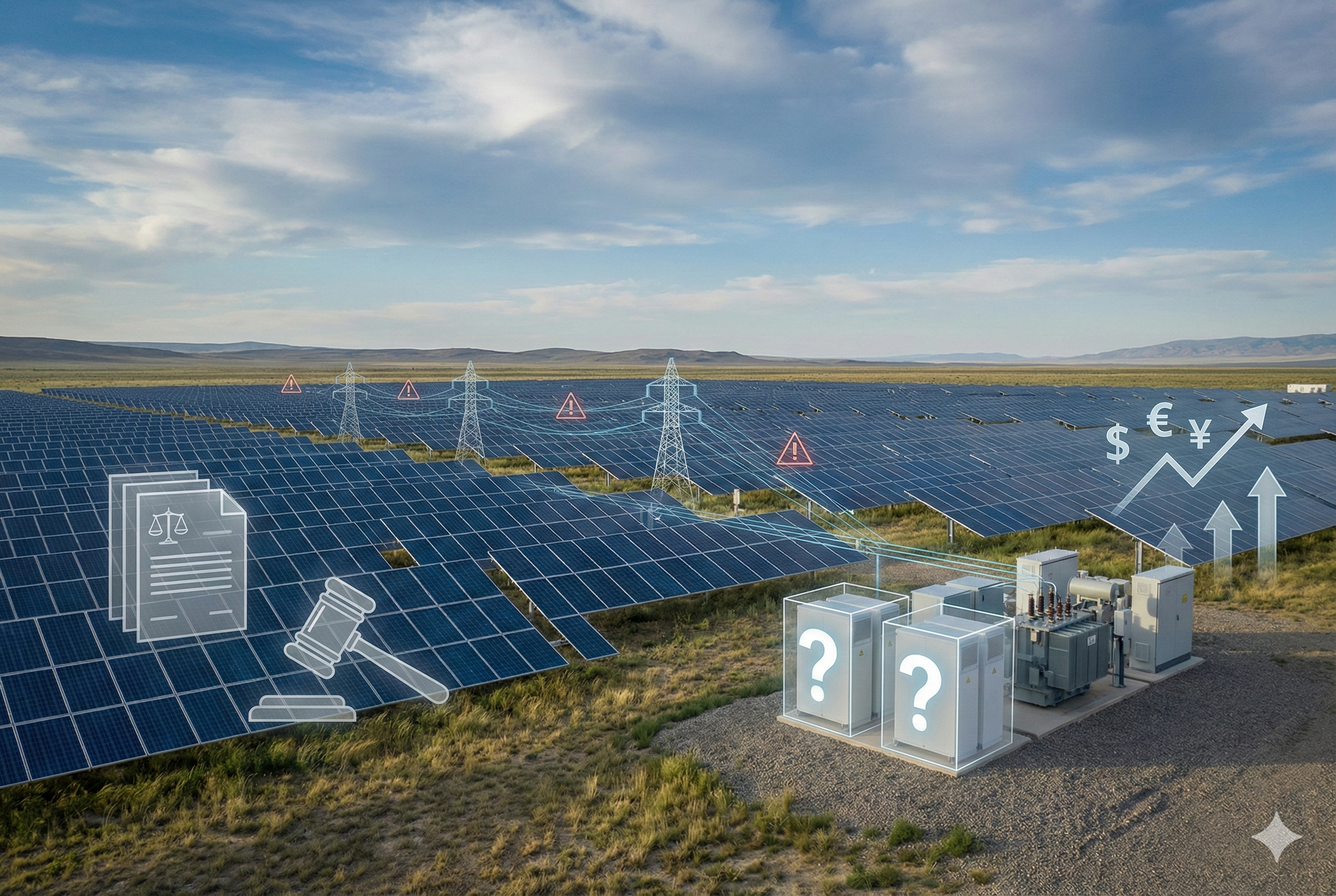
However, despite declining costs, technological improvements, and strong environmental benefits, solar adoption at an industry level still faces multiple structural challenges. These challenges slow deployment, increase project risks, and limit the scalability of solar energy across regions.
This article explores the key challenges in solar adoption, focusing on industry-level barriers rather than household-level concerns. Understanding these obstacles is critical for policymakers, investors, developers, utilities, and clean-energy stakeholders who want to accelerate the transition to renewable energy.
Why Industry-Level Solar Adoption Matters
Solar adoption at scale is not just about installing panels. It affects:
- National energy security
- Grid stability and reliability
- Long-term electricity pricing
- Climate and emissions targets
- Economic development and employment
When industry-level adoption slows, entire renewable energy targets are delayed. Therefore, identifying and solving these challenges is essential for long-term sustainability.
Global Overview of Solar Energy Adoption
Over the past decade, global solar capacity has grown exponentially. Solar is now one of the fastest-growing sources of new electricity generation worldwide. Yet this growth is uneven.
Some regions experience rapid deployment due to strong policy support and financing access, while others lag because of regulatory complexity, grid constraints, or market uncertainty.
This uneven progress highlights that solar adoption challenges are systemic rather than technological alone.
Key Challenges in Solar Adoption (Industry-Level)
1. Policy and Regulatory Challenges
Unstable Policy Frameworks
One of the most significant barriers to solar adoption is inconsistent or unpredictable policy environments. Solar projects require long-term planning and investment certainty. Sudden changes in regulations, subsidies, or tariffs can disrupt project economics.
Common regulatory issues include:
- Frequent changes in incentive schemes
- Withdrawal or reduction of subsidies
- Unclear renewable energy targets
- Delays in policy approvals
Without long-term policy clarity, investors often hesitate to fund solar projects.
Complex Approval and Permitting Processes
Lengthy permitting procedures significantly slow solar deployment. Developers often face:
- Multiple authority approvals
- Overlapping jurisdictional rules
- Delays in land and grid permissions
These administrative hurdles increase project timelines and costs, making solar less attractive compared to conventional energy sources.
2. Financial and Economic Barriers
High Upfront Capital Investment
Although solar energy offers low operating costs, the initial capital expenditure remains a major challenge. Utility-scale solar projects require substantial upfront investment in:
- Solar modules
- Inverters and balance-of-system components
- Land acquisition
- Engineering and construction
For many developers, especially in emerging markets, raising this capital is difficult.
Limited Access to Affordable Financing
Solar projects depend heavily on debt financing. However, lenders often perceive renewable energy projects as risky due to:
- Policy uncertainty
- Technology unfamiliarity
- Revenue variability
As a result, interest rates may be higher, reducing project viability.
3. Grid Infrastructure and Integration Challenges
Inadequate Grid Capacity
Existing electricity grids were designed for centralized fossil-fuel power plants. Integrating large volumes of decentralized solar power strains these systems.
Key issues include:
- Grid congestion
- Voltage fluctuations
- Limited capacity for new connections
In many regions, solar projects are delayed not because of technology but due to lack of grid readiness.
Intermittency and Grid Stability
Solar energy is inherently variable. Power generation depends on sunlight, which creates challenges for grid operators who must balance supply and demand in real time.
Without proper storage or grid management systems, high solar penetration can affect grid reliability.
4. Energy Storage Limitations
Energy storage is essential for managing solar intermittency. However, storage solutions face their own challenges.
High Storage Costs
Battery energy storage systems remain expensive, particularly for large-scale projects. These costs add to overall project budgets and can limit adoption.
Technology and Lifecycle Concerns
Battery degradation, recycling challenges, and raw material supply constraints affect long-term storage viability. Until storage becomes more affordable and scalable, it remains a key bottleneck.
5. Supply Chain and Manufacturing Challenges
Dependence on Global Supply Chains
The solar industry relies heavily on global manufacturing networks. Disruptions caused by trade disputes, logistics delays, or material shortages can significantly impact project timelines.
Key supply chain risks include:
- Price volatility of raw materials
- Shipping delays
- Import duties and tariffs
These risks create uncertainty for developers and investors.
Market Concentration
Solar manufacturing is concentrated in a limited number of countries. This concentration increases vulnerability to geopolitical and economic shifts.
6. Land Availability and Environmental Concerns
Land Acquisition Challenges
Utility-scale solar projects require large tracts of land. Acquiring suitable land can be difficult due to:
- Competing land uses
- Agricultural concerns
- Legal disputes
Land-related delays are a major reason for project postponements.
Environmental Impact Assessments
While solar is environmentally friendly, large installations still require environmental assessments. These processes, though necessary, can slow development and add compliance costs.
7. Market Structure and Utility Resistance
Traditional Utility Business Models
In some regions, utilities resist solar adoption because decentralized generation threatens traditional revenue models. This resistance can appear as:
- Delayed grid approvals
- Restrictive interconnection rules
- Unfavourable tariff structures
Aligning utility incentives with renewable goals remains a challenge.
8. Workforce and Skill Gaps
Shortage of Skilled Labour
Rapid solar expansion requires a skilled workforce, including:
- Engineers
- Installers
- Grid specialists
- Maintenance professionals
Many regions lack adequate training infrastructure, slowing project execution.
Limited Technical Education
Solar-specific education and vocational training programs are still underdeveloped in many markets, creating long-term talent shortages.
9. Public Awareness and Perception Issues
Lack of Industry-Level Awareness
While awareness is improving, misconceptions persist regarding:
- Solar reliability
- Long-term performance
- Return on investment
These misconceptions influence policymakers, financiers, and consumers alike.
Community Opposition
Local resistance due to visual impact or misinformation can delay or halt large projects, especially in densely populated or environmentally sensitive areas.
Regional Differences in Solar Adoption Challenges
Developed Markets
- Strong grid infrastructure
- High labour costs
- Complex regulations
Developing Markets
- Financing constraints
- Weak grid systems
- Policy uncertainty
Understanding regional differences is critical for designing effective solar strategies.
How the Solar Industry Is Addressing These Challenges
Despite obstacles, the industry is evolving rapidly.
Policy Reforms
Governments are introducing:
- Long-term renewable targets
- Simplified permitting systems
- Stable incentive mechanisms
Innovative Financing Models
New models include
- Power purchase agreements
- Green bonds
- Blended finance
These tools reduce financial risk and attract investment.
Technological Advancements
Improvements in:
- Solar efficiency
- Battery storage
- Smart grid systems
are steadily reducing adoption barriers.
Future Outlook for Solar Adoption
The future of solar adoption remains strong. Continued cost reductions, climate commitments, and energy security concerns will drive expansion.
However, progress depends on:
- Regulatory stability
- Grid modernisation
- Storage scalability
- Workforce development
Solving industry-level challenges will determine how quickly solar can become a dominant energy source.
Conclusion: Overcoming the Key Challenges in Solar Adoption
Solar energy is no longer a niche solution—it is a necessity for a sustainable future. However, industry-level challenges continue to limit its full potential.
By addressing policy uncertainty, financing barriers, grid limitations, supply chain risks, and workforce gaps, stakeholders can accelerate solar adoption globally.
According to the International Energy Agency (IEA), solar power is expected to become the largest source of electricity generation globally, highlighting both its potential and the urgency of addressing adoption challenges.
At SolarXNest, understanding these challenges helps drive smarter decisions, better investments, and a cleaner energy future.