Introduction
The global energy sector is undergoing a historic transformation. Over the past decade, renewable energy particularly solar power has experienced massive growth due to falling technology costs, supportive government policies, and increasing climate awareness. However, solar power has always faced one major limitation: it only generates electricity when the sun is shining.
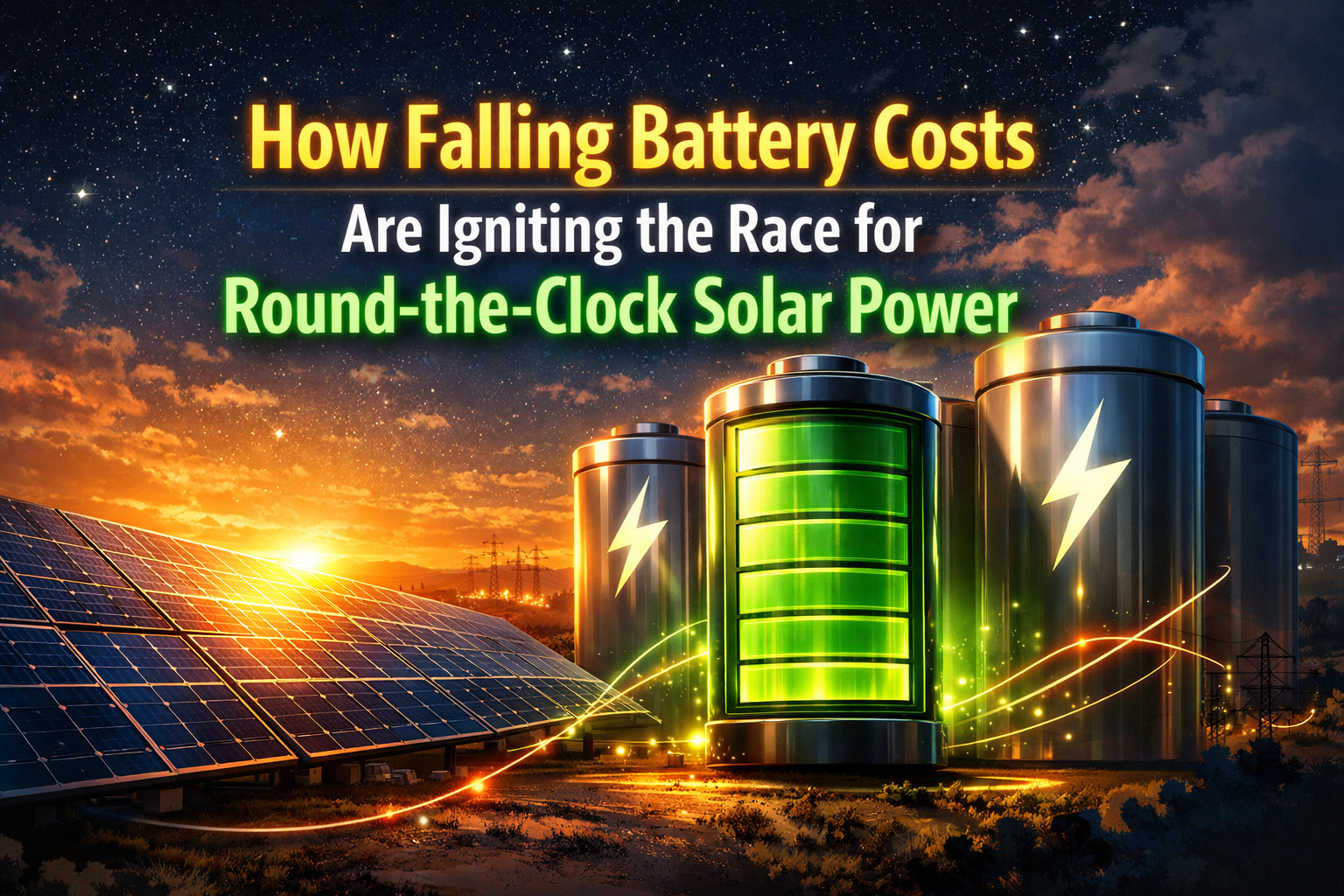
Today, that limitation is rapidly disappearing. The dramatic decline in battery storage costs is enabling solar energy to be stored and used at any time of the day or night. This innovation is igniting a global race to develop round-the-clock solar power, also known as 24/7 solar or dispatchable solar energy.
Round-the-clock solar systems combine solar power plants with large-scale battery storage systems. During the day, solar panels generate electricity, and any surplus energy is stored in batteries. At night or during cloudy periods, the stored energy is released to provide a continuous power supply.
This transformation is already happening around the world. For example, one of the most ambitious projects developed by Masdar in Abu Dhabi combines 5.2 gigawatts of solar generation with 19 gigawatt-hours of battery storage, enabling the plant to deliver 1 gigawatt of constant power 24 hours a day throughout the year.
Such projects represent a significant shift in the global energy landscape. Instead of intermittent renewable energy that depends on weather conditions, countries can now build solar systems capable of delivering reliable electricity around the clock.
This blog explores how falling battery costs are driving this transformation, the technologies behind solar-plus-storage systems, and why round-the-clock solar power could become the backbone of the future energy system.
The Evolution of Solar Energy
Early Development of Solar Power
Solar energy has been used for decades, but its widespread adoption began only in the early 2000s. At that time, solar power was considered expensive and unreliable. The cost of solar photovoltaic (PV) systems was high, and energy storage technologies were limited.
Over the past 15 years, however, solar technology has advanced dramatically. Manufacturing improvements, global supply chains, and economies of scale have reduced the cost of solar panels by nearly 90% over the past decade, making solar one of the cheapest sources of electricity in many regions.
Countries such as China, India, the United States, and Germany have invested heavily in solar energy infrastructure. As a result, solar capacity has expanded rapidly, with thousands of large solar farms and millions of rooftop installations around the world.
The Intermittency Problem
Despite its advantages, solar energy has always had a key drawback: intermittency. Solar panels produce electricity only during daylight hours and their output can fluctuate due to weather conditions.
This variability creates challenges for electricity grids, which must balance supply and demand in real time. When solar production exceeds demand, excess electricity may be wasted. Conversely, during the evening when demand peaks, solar generation drops to zero.
For years, utilities relied on fossil fuel plants especially natural gas to fill this gap. But as the world transitions toward cleaner energy, researchers and engineers have been searching for solutions that allow renewable energy to provide reliable power without relying on fossil fuels.
The Rise of Battery Energy Storage
Why Batteries Are Critical for Renewable Energy
Battery energy storage systems (BESS) play a crucial role in modern energy systems. They store electricity during periods of excess generation and release it when demand increases.
For solar power, batteries enable energy produced during the day to be stored and used at night. This simple concept solves the biggest limitation of solar energy and allows it to become a reliable power source.
Batteries also provide several additional benefits:
- Grid stability
- Backup power during outages
- Reduced need for fossil fuel power plants
- Better integration of renewable energy
As renewable energy adoption increases, the demand for large-scale battery storage is growing rapidly worldwide.
The Decline in Battery Costs
One of the main reasons for the rapid growth of solar-plus-storage systems is the dramatic decline in battery prices.
Battery storage costs have fallen sharply in recent years due to technological improvements and increased manufacturing capacity. In 2025, the global benchmark cost for a four-hour battery storage project dropped 27% to about $78 per megawatt-hour, making storage far more affordable for utilities and developers.
Another major factor is the expansion of the electric vehicle industry. Massive investments in lithium-ion battery manufacturing have created global supply chains capable of producing batteries at unprecedented scale.
China, in particular, has become the dominant player in battery production, with manufacturing capacity exceeding global demand. This oversupply has intensified competition among manufacturers and driven prices down significantly.
As battery costs continue to decline, energy storage is becoming a key component of renewable energy projects worldwide.
Solar Plus Storage: The New Energy Model
What Is Solar Plus Storage?
Solar-plus-storage systems combine photovoltaic solar panels with battery storage technology. The system works in three stages:
- Solar panels generate electricity during the day.
- Excess electricity is stored in batteries.
- Stored energy is released during evening or night hours.
This approach allows solar energy to provide electricity even when sunlight is unavailable.
Advantages of Solar-Plus-Storage Systems
Solar-plus-storage systems offer numerous advantages compared to traditional power plants.
1. Reliable Power Supply
By storing energy for later use, these systems can deliver electricity around the clock.
2. Reduced Carbon Emissions
Solar power produces no greenhouse gas emissions during operation, helping countries meet climate goals.
3. Lower Energy Costs
As solar and battery technologies become cheaper, renewable electricity becomes more competitive with fossil fuels.
4. Energy Independence
Countries can reduce reliance on imported fuels by producing their own renewable energy.
The Global Race for Round-the-Clock Solar
Large-Scale Projects Around the World
Several countries are now developing massive solar-plus-storage projects capable of delivering continuous electricity.
Abu Dhabi’s Round-the-Clock Solar Project
One of the most ambitious examples is the Abu Dhabi project developed by Masdar. This facility combines 5.2 GW of solar capacity with 19 GWh of battery storage, providing continuous electricity for hundreds of thousands of homes.
This project demonstrates that solar energy can function like a traditional power plant, delivering reliable power day and night.
Chile’s Energy Storage Boom
Chile is another leader in energy storage deployment. The country has 9 GW of battery storage either operational or under development, with an additional 27 GW planned to support renewable energy expansion.
Chile’s rapid adoption of storage technology highlights the importance of batteries for integrating large amounts of solar and wind power into the electricity grid.
India’s Solar-Storage Initiatives
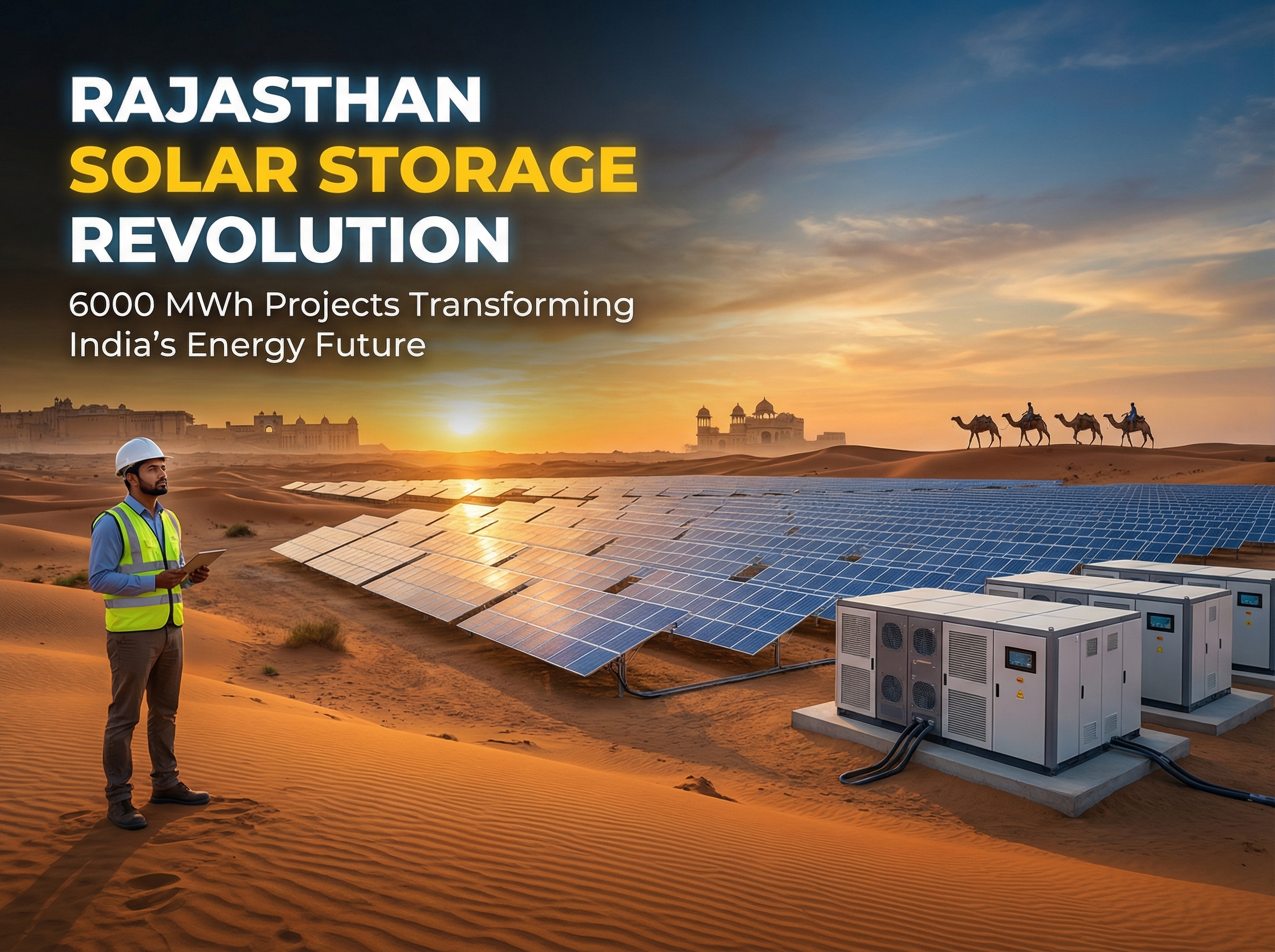
India is also making significant progress in solar-plus-storage development. Some projects have already demonstrated that renewable electricity can be delivered at competitive prices even during nighttime hours.
In Rajasthan, battery storage auctions have achieved record low prices, enabling solar energy to be supplied during peak demand periods at lower costs than coal-generated electricity.
Similarly, projects in Madhya Pradesh are providing firm green power at tariffs below ₹3 per unit, demonstrating the economic viability of solar-plus-storage systems.
These developments show that round-the-clock solar power is becoming a practical solution for meeting energy demand.
How Batteries Are Transforming Electricity Markets
From Intermittent to Dispatchable Energy
Traditionally, renewable energy was considered “intermittent,” meaning it depended on natural conditions such as sunlight or wind.
Battery storage transforms renewable energy into dispatchable power, meaning it can be delivered whenever needed.
This capability allows renewable energy to compete directly with conventional power plants.
Peak Demand Management
Electricity demand typically peaks in the evening when people return home and use appliances, lighting, and air conditioning.
Solar-plus-storage systems can store energy during the day and release it during these peak hours, reducing the need for expensive fossil fuel plants.
Reducing Curtailment
Curtailment occurs when renewable energy production exceeds grid capacity, forcing operators to waste excess electricity.
Battery storage allows this excess energy to be stored instead of wasted, improving the efficiency of renewable energy systems.
The Future of Solar Energy
Rapid Growth in Energy Storage
Energy storage is expanding rapidly worldwide. In 2024 alone, the world added approximately 180 gigawatt-hours of battery storage capacity, nearly doubling the previous year’s total.
This rapid growth reflects the increasing importance of storage technologies in modern energy systems.
Solar-Plus-Storage Becoming the Standard
As battery prices continue to decline, many experts believe that solar-plus-storage will become the default model for new power plants.
Instead of building standalone solar farms, developers will increasingly build hybrid systems that combine solar panels with battery storage.
Growth in Emerging Markets
Emerging markets such as Africa, Southeast Asia, and Latin America are expected to benefit significantly from solar-plus-storage systems.
In regions with unreliable electricity grids, these systems can provide clean, reliable power without relying on expensive diesel generators.
This could dramatically improve energy access for millions of people worldwide.
Challenges and Limitations
Although round-the-clock solar power is promising, several challenges remain.
High Initial Investment
Large-scale battery storage systems require significant upfront investment.
Supply Chain Issues
Battery production relies on minerals such as lithium, cobalt, and nickel, which may face supply constraints.
Recycling and Environmental Concerns
Battery recycling and disposal must be managed carefully to avoid environmental impacts.
The Road Ahead
Despite these challenges, the future of solar-plus-storage systems looks extremely promising. Continued technological innovation, declining costs, and increasing demand for clean energy will drive rapid expansion in the coming decades.
Experts predict that battery storage capacity will grow significantly by 2035, becoming a core component of the global energy system.
As countries race to achieve climate goals and reduce dependence on fossil fuels, round-the-clock solar power could become the foundation of a new, sustainable energy economy.
Conclusion
The combination of falling battery costs and rapidly expanding solar energy capacity is transforming the global energy landscape. What was once considered an intermittent energy source is now evolving into a reliable, dispatchable power solution capable of delivering electricity around the clock.
Massive solar-plus-storage projects in regions such as the Middle East, Chile, India, and the United States demonstrate that round-the-clock solar power is no longer a distant vision—it is becoming a reality.
As battery technology continues to improve and costs continue to fall, solar energy will likely play an increasingly dominant role in the world’s electricity supply.
The race for round-the-clock solar power has already begun, and it may ultimately redefine how the world produces, stores, and consumes energy.
Also Read : India’s Solar Industry Seeks ₹25,000 Crore Boost for Manufacturing