Introduction
The global energy landscape is undergoing one of the most significant transformations in modern history. Solar power, once considered an alternative or supplementary energy source, has rapidly evolved into a mainstream electricity solution. However, one major limitation historically prevented solar energy from becoming the dominant power source — intermittency. Solar panels generate electricity only when sunlight is available, creating challenges for night-time usage and grid stability.
Today, that challenge is being solved through battery energy storage systems (BESS). The integration of solar power with battery storage is reshaping how electricity is generated, stored, distributed, and consumed. Across residential, commercial, and utility-scale projects, solar + battery storage is becoming the new global energy standard.
Governments, utilities, corporations, and homeowners are increasingly adopting combined solar and storage solutions to ensure reliability, energy independence, and sustainability. This shift marks a new era where renewable energy can deliver consistent power comparable to traditional fossil-fuel systems.
This article explores why solar paired with battery storage is rapidly becoming the default energy model, the technologies driving this transformation, economic benefits, global trends, challenges, and what the future holds.
Understanding Solar Energy and Its Limitations
Solar energy works by converting sunlight into electricity using photovoltaic (PV) panels. Over the last decade, solar technology has seen massive cost reductions, making it one of the cheapest electricity sources worldwide.
The Core Challenge: Intermittency
Despite its advantages, solar power has a natural limitation:
- Electricity production depends on sunlight.
- Power generation stops at night.
- Cloud cover reduces output.
- Energy demand often peaks after sunset.
This mismatch between energy production and consumption created dependency on fossil fuel backup systems such as coal or gas plants.
Without storage, excess solar energy generated during the day is often wasted or sold back to the grid at lower prices.
What Is Battery Energy Storage?
Battery Energy Storage Systems (BESS) store electricity generated during peak production periods and release it when needed.
How It Works
- Solar panels generate electricity during daylight hours.
- Excess energy charges a battery system.
- Stored electricity is used:
- At night
- During power outages
- During peak electricity pricing hours
Modern batteries automatically manage charging and discharging using smart energy management software.
Why Solar + Battery Storage Is Becoming the New Standard
1. Reliable 24/7 Renewable Energy
Battery storage solves solar’s biggest limitation — availability.
Energy can now be stored during the day and used anytime, turning solar into a dependable power source.
This reliability allows renewable energy to replace conventional power plants rather than merely supporting them.
2. Falling Battery Costs
One of the biggest drivers of adoption is rapidly declining battery prices.
Over the past decade:
- Lithium-ion battery costs have dropped significantly.
- Manufacturing scale has improved efficiency.
- Electric vehicle demand accelerated battery innovation.
As prices continue to fall, solar-plus-storage systems are becoming financially attractive for households and businesses.
3. Energy Independence
Solar combined with storage enables users to reduce dependence on traditional power grids.
Benefits include:
- Protection from power outages
- Reduced electricity bills
- Independence from rising energy tariffs
- Backup power during emergencies
This is particularly important in regions with unstable grids or frequent power cuts.
4. Peak Demand Management
Electricity prices often rise during high-demand hours, typically evenings.
Battery storage allows users to:
- Store cheap daytime solar energy.
- Use stored energy during expensive peak hours.
This strategy, known as peak shaving, significantly lowers energy costs.
5. Grid Stability and Modernisation
Electric grids were originally designed for centralised power generation. Renewable energy introduces variability, which can destabilise grids.
Battery storage helps by:
- Balancing supply and demand instantly.
- Providing frequency regulation.
- Preventing blackouts.
- Supporting renewable integration at scale.
Utilities worldwide are investing heavily in grid-scale batteries.
Global Adoption Trends
United States
The US is witnessing rapid deployment of utility-scale solar farms paired with large battery storage installations. Several states now require storage integration in renewable projects.
California leads adoption due to grid reliability challenges and renewable energy targets.
Europe
European countries are integrating storage to reduce reliance on imported fossil fuels. Residential battery adoption is increasing alongside rooftop solar installations.
Germany and the UK are expanding grid-scale battery systems to stabilise renewable-heavy grids.
India
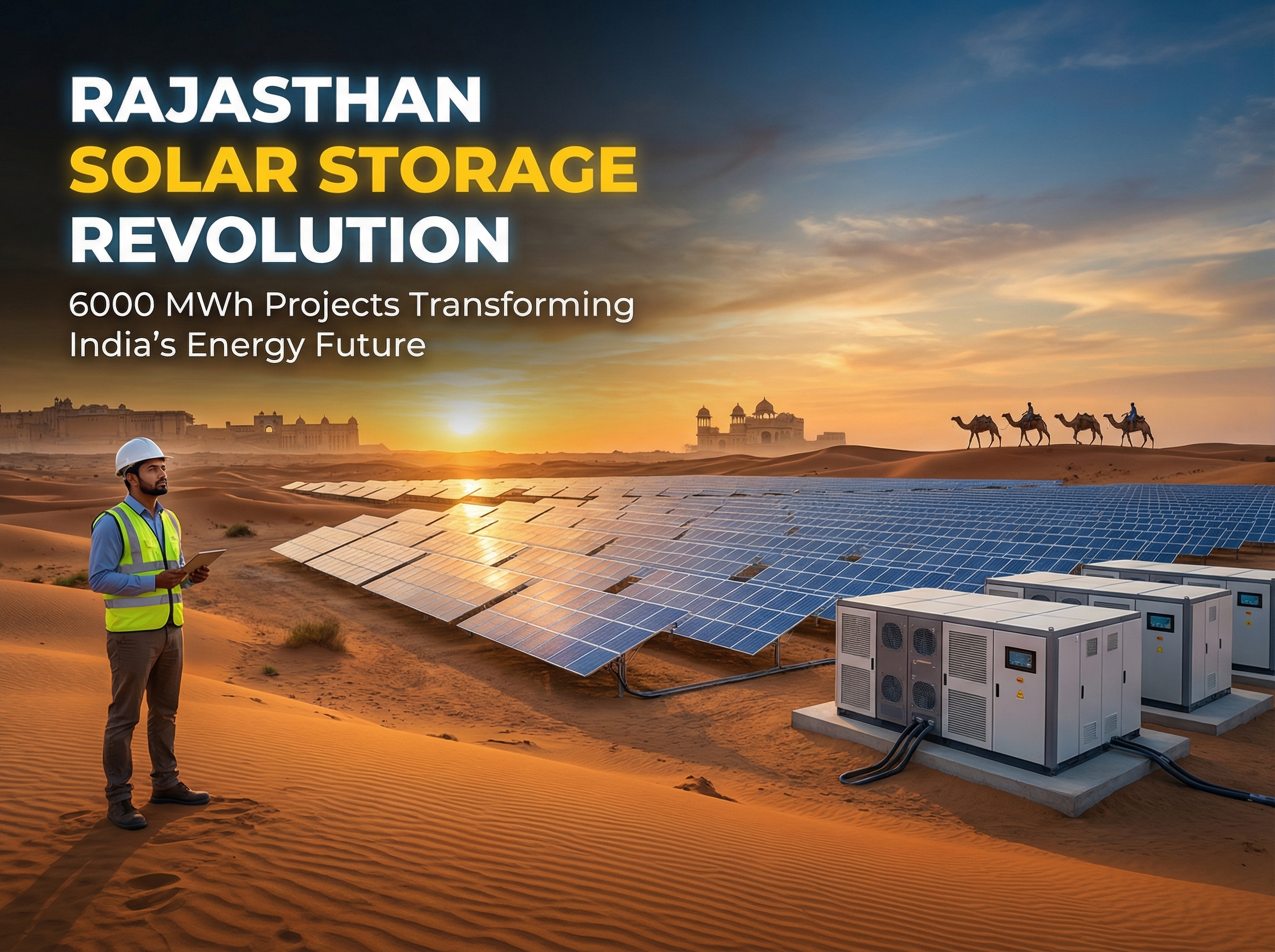
India’s renewable energy mission is accelerating solar-plus-storage deployment.
Key drivers include:
- Government renewable targets.
- Growing electricity demand.
- Hybrid solar-storage tenders.
- Rural electrification initiatives.
Battery-backed solar projects are becoming essential for consistent energy supply.
Asia-Pacific Region
Countries like Australia and China are investing heavily in battery storage.
Australia, in particular, has pioneered large grid batteries that respond to power fluctuations within milliseconds.
Types of Battery Technologies Used in Solar Storage
Lithium-Ion Batteries
Currently the most popular option due to:
- High efficiency
- Long lifespan
- Compact design
- Fast charging capability
Used in residential and large-scale applications.
Lithium Iron Phosphate (LFP)
Increasingly preferred because of:
- Better safety
- Longer cycle life
- Lower degradation
Many modern solar storage systems now use LFP chemistry.
Flow Batteries
Designed for large-scale applications with longer duration storage capabilities.
Advantages include:
- Extended lifespan
- Scalability
- Improved safety
Emerging Technologies
Future battery technologies under development include:
- Solid-state batteries
- Sodium-ion batteries
- Hydrogen storage integration
These innovations may further reduce costs and improve sustainability.
Economic Benefits of Solar + Storage
Lower Electricity Bills
Consumers generate and store their own electricity, reducing reliance on expensive grid power.
Increased Property Value
Homes equipped with solar and storage systems often attract higher resale value due to energy savings.
Reduced Operational Costs for Businesses
Commercial facilities can manage energy consumption more efficiently and reduce peak demand charges.
Long-Term Investment Stability
Unlike fossil fuel energy, solar energy has predictable operating costs after installation.
Environmental Advantages
Solar plus storage significantly reduces carbon emissions by replacing fossil fuel backup power.
Key environmental benefits include:
- Lower greenhouse gas emissions
- Reduced air pollution
- Sustainable energy production
- Improved energy efficiency
Battery storage also allows greater renewable penetration into national grids, accelerating climate goals.
Role of Artificial Intelligence in Solar Storage Systems
AI is playing an increasingly important role in energy management.
Smart systems can:
- Predict energy generation based on weather forecasts.
- Optimise battery charging cycles.
- Detect equipment faults early.
- Improve system efficiency automatically.
AI-driven energy management maximises savings and system lifespan.
Residential Solar + Storage Revolution
Homeowners are rapidly adopting integrated systems.
Key Motivations
- Backup power during outages
- Rising electricity prices
- Environmental awareness
- Government incentives
Modern home systems automatically switch between solar, battery, and grid power for optimal efficiency.
Commercial and Industrial Adoption
Businesses consume large amounts of electricity and benefit greatly from storage systems.
Industries use batteries to:
- Maintain uninterrupted operations.
- Reduce peak demand charges.
- Achieve sustainability targets.
- Improve energy resilience.
Corporate sustainability commitments are accelerating adoption worldwide.
Utility-Scale Solar and Mega Battery Projects
Large battery installations are transforming national energy systems.
Utility-scale batteries can:
- Store gigawatt-hours of electricity.
- Stabilise entire regions.
- Replace peaker power plants.
- Support renewable expansion.
These projects demonstrate that renewable energy can operate at national scale reliably.
Government Policies Driving Growth
Many governments support solar-plus-storage adoption through:
- Subsidies and tax credits
- Net metering policies
- Renewable energy mandates
- Energy transition funding
Policy support is crucial in accelerating adoption and reducing upfront costs.
Challenges Facing Solar + Storage Adoption
Despite rapid growth, some challenges remain.
High Initial Investment
Although long-term savings are strong, upfront installation costs can still be significant.
Battery Recycling
End-of-life battery management requires improved recycling infrastructure.
Supply Chain Constraints
Demand for battery materials such as lithium and nickel is increasing rapidly.
Regulatory Barriers
Energy policies in some regions still favour traditional power generation models.
Future Outlook: What the Next Decade Looks Like
Experts predict solar plus storage will dominate new energy installations globally.
Future developments may include:
- Fully decentralised energy systems.
- Smart homes powered by renewable microgrids.
- Electric vehicles acting as mobile batteries.
- AI-managed energy ecosystems.
Energy systems will shift from centralised generation to distributed renewable networks.
Solar + Storage and Energy Security
Energy security has become a global priority.
Battery-backed solar systems protect nations from:
- Fuel price volatility
- Supply disruptions
- Geopolitical risks
Local renewable energy generation strengthens national resilience.
Integration With Electric Vehicles
Electric vehicles and home batteries are beginning to integrate.
Vehicle-to-home (V2H) technology allows EV batteries to power homes during outages, creating a unified clean energy ecosystem.
The Business Opportunity in Solar Storage
The solar storage market is creating massive economic opportunities:
- Installation companies
- Energy software platforms
- Battery manufacturing
- Smart grid technology providers
Millions of new jobs are expected globally.
Why Solar + Storage Is Inevitable
Several forces are converging:
- Falling technology costs
- Climate commitments
- Energy demand growth
- Technological innovation
- Consumer awareness
Together, they make solar plus storage not just an option but an inevitable energy standard.
Conclusion
Solar energy alone revolutionised clean power generation, but battery storage completes the transformation. By solving intermittency and reliability challenges, solar plus storage systems provide consistent, affordable, and sustainable electricity.
The transition represents more than a technological upgrade — it marks a fundamental shift in how humanity produces and consumes energy. Homes, businesses, and entire nations are moving toward energy independence powered by renewable sources supported by intelligent storage systems.
As costs continue to decline and innovation accelerates, solar plus battery storage will become the backbone of global electricity infrastructure. The future energy system will not rely on fossil fuels but on smart, decentralised networks where clean energy is generated, stored, and used efficiently.
Solar + battery storage is no longer the future of energy — it is rapidly becoming the present standard.
Also Read : India’s Solar Future Takes Center Stage: India Solar Week 2026 Opens With MNRE Support