The city of Nagpur is taking a bold and innovative step toward sustainable infrastructure with its latest initiative: solar-powered traffic signal sheds. Introduced by the Nagpur Municipal Corporation, this concept is not just another urban experiment; it represents a shift in how cities can combine comfort, clean energy, and smart design into a single solution.
In a country like India, where urban heat is becoming increasingly intense, especially in central regions, commuters often struggle with extreme weather conditions. Nagpur, known for its scorching summers, frequently experiences temperatures crossing 45°C. At traffic signals, where people are forced to wait under direct sunlight, the discomfort becomes even more severe. This project directly addresses that issue while simultaneously contributing to renewable energy goals.
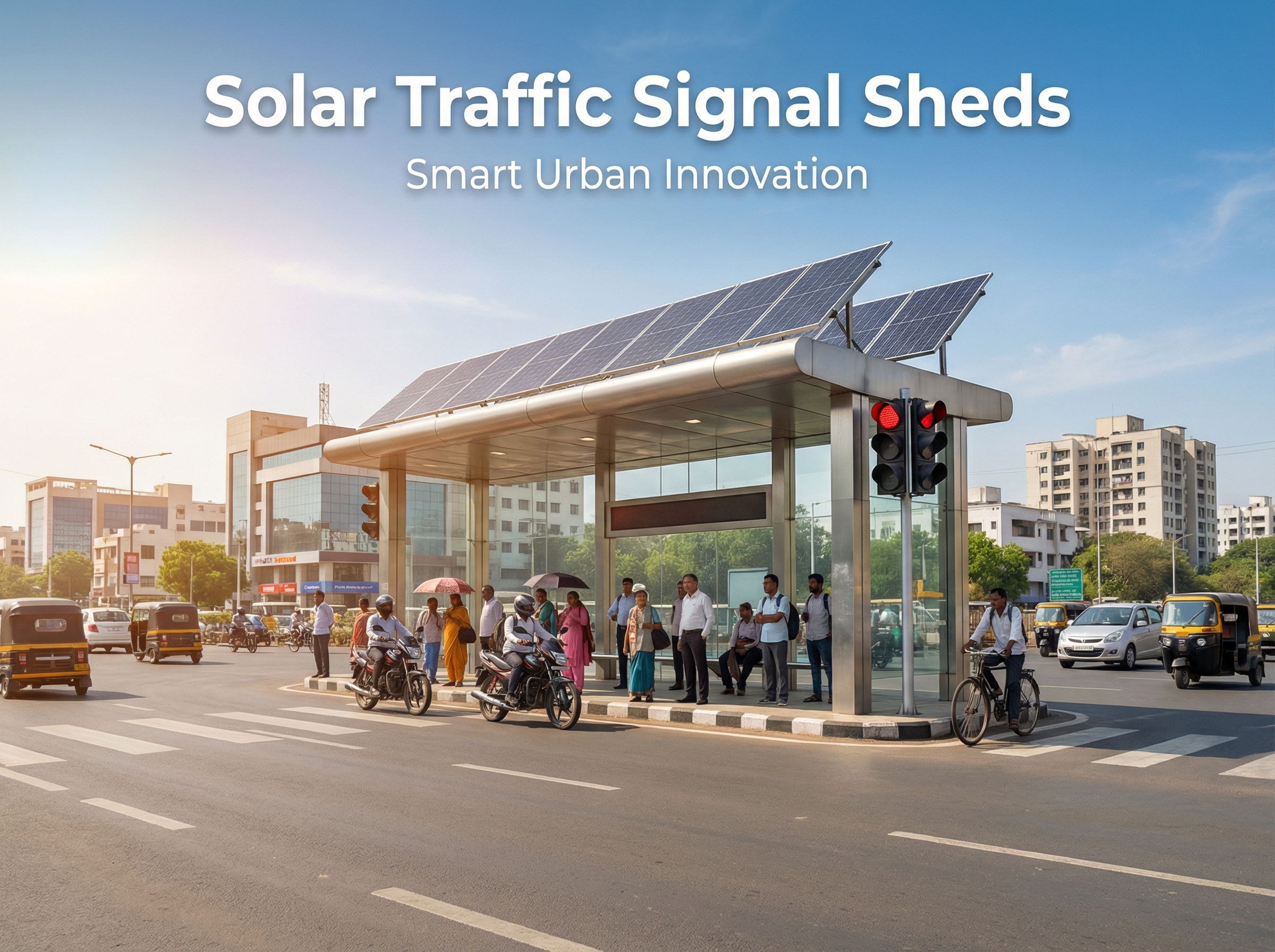
The idea behind solar traffic signal sheds is simple yet powerful. Structures will be installed at major intersections to provide shade to commuters, particularly two-wheeler riders, pedestrians, and cyclists. On top of these structures, solar panels will be mounted to capture sunlight and convert it into electricity. This electricity can then be used to power traffic signals, streetlights, or other nearby infrastructure. In essence, the same structure that provides physical comfort also becomes a source of clean energy.
What makes this initiative even more interesting is the participatory approach taken by the Nagpur Municipal Corporation. Instead of directly implementing a fixed design, the civic body has invited architects, engineers, and innovators to submit creative and efficient designs under a public challenge. This approach ensures that the final implementation is not only functional but also aesthetically appealing and structurally efficient. It reflects a modern governance model where citizens and professionals collaborate to build smarter cities.
The benefits of this concept extend far beyond just shade. From an environmental perspective, it contributes to reducing carbon emissions by promoting solar energy. Every unit of electricity generated through these panels reduces dependence on fossil fuels. In the long run, if implemented across multiple intersections, the cumulative energy generation can be significant. This aligns perfectly with India’s broader renewable energy ambitions and its push toward sustainable urban development.
Economically, the project has strong potential as well. These sheds can be designed to include advertising panels, turning them into revenue-generating assets for the municipality. Instead of being a cost burden, the infrastructure can partially sustain itself through advertisements displayed at high-traffic intersections. This creates a win-win situation where the city improves public infrastructure without heavily straining its budget.
Another important advantage is the improvement in overall urban aesthetics. Traffic intersections are often chaotic and visually cluttered. Well-designed solar sheds can enhance the visual appeal of these spaces, giving them a more organized and modern look. When combined with proper lighting and digital displays, these structures can contribute to the broader vision of smart cities.
However, like any ambitious project, this initiative also comes with challenges. The initial cost of installation can be high, especially when considering durable materials, solar panels, and electrical systems. Maintenance is another concern. Dust accumulation on solar panels can reduce efficiency, and regular cleaning will be necessary, particularly in a city like Nagpur where dust levels can be significant. Structural durability must also be ensured to withstand weather conditions such as heavy rains and strong winds.
Urban planning constraints could pose additional hurdles. Traffic intersections vary in size and design, and not all locations may be suitable for installing such sheds. Ensuring that these structures do not obstruct visibility for drivers or interfere with traffic signals will be critical. Careful planning and customized designs will be required for different intersections.
Despite these challenges, the long-term advantages outweigh the limitations. Compared to temporary solutions like green nets, which have been used in some cities to provide shade, solar sheds offer a permanent and multi-functional alternative. Green nets may provide short-term relief, but they do not generate energy, lack durability, and often fail to maintain aesthetic standards. Solar sheds, on the other hand, represent a future-ready solution that integrates technology with urban needs.
Looking ahead, the potential of this concept is immense. If successful in Nagpur, it can be replicated in other cities across India such as Delhi, Mumbai, Bengaluru, and Hyderabad. With slight modifications, these structures could even be integrated with electric vehicle charging stations, smart sensors, and surveillance systems. This would transform them from simple sheds into advanced smart infrastructure units.
The project also opens doors for innovation in design and engineering. Lightweight materials, better solar panel efficiency, and modular construction techniques can further enhance the feasibility of such solutions. Over time, as technology advances and costs decrease, the adoption of similar infrastructure could become widespread.
At its core, this initiative reflects a shift in thinking. Instead of addressing problems in isolation, it combines multiple solutions into a single integrated system. It recognises that urban challenges heat, energy demand, and infrastructure gaps—are interconnected and must be solved together. This kind of holistic approach is essential for building cities that are not only smart but also sustainable and livable.
In conclusion, the solar traffic signal shed initiative in Nagpur is more than just a local project; it is a model for the future of urban development in India. By blending renewable energy with public convenience and smart design, it sets a powerful example of how innovation can improve everyday life. As cities continue to grow and climate challenges intensify, such ideas will play a crucial role in shaping a better, cleaner, and more comfortable urban environment for everyone.
According to a recent report, the Nagpur Municipal Corporation has invited innovative designs for solar-powered traffic signal sheds to improve commuter comfort and generate clean energy
Also Read: Uttar Pradesh Leads India’s Solar Revolution with Record 52,000+ Rooftop Installations in March 2026