Top Solar Technologies 2025: TOPCon, N-Type & Bifacial Explained
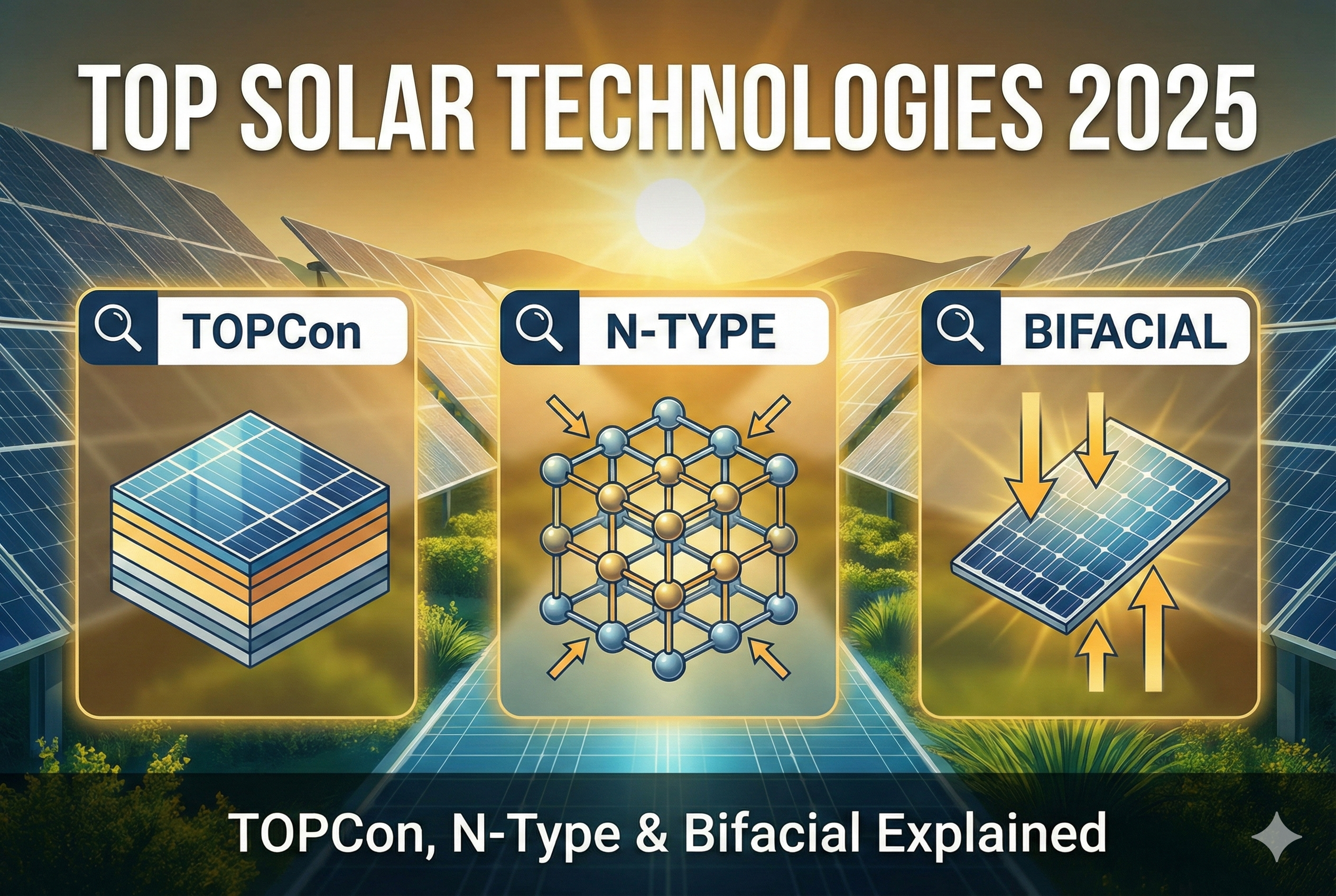
Top Solar Technologies 2025 represents a major shift in how the solar industry designs, manufactures and deploys photovoltaic systems. As efficiency demands increase and customers look for higher lifetime performance, technologies like TOPCon, N-type and bifacial solar modules are becoming the new industry standards. These technologies offer better energy output, stronger durability and greater long-term value compared with older PERC modules. In this guide, we explore why these innovations lead the list of Top Solar Technologies 2025 and how they can significantly improve the performance of residential, commercial and utility-scale systems.
Why Top Solar Technologies 2025 Matter
The solar market is evolving quickly. Installers, engineers and energy planners now prioritise solutions that deliver:
- Higher efficiency
- Lower degradation
- Better low-light performance
- Increased durability in extreme climates
- Stronger output per square metre
This shift is why Top Solar Technologies 2025 focuses heavily on TOPCon, N-type and bifacial modules. They respond directly to the demand for better long-term results and more consistent electricity generation.
Understanding TOPCon Technology
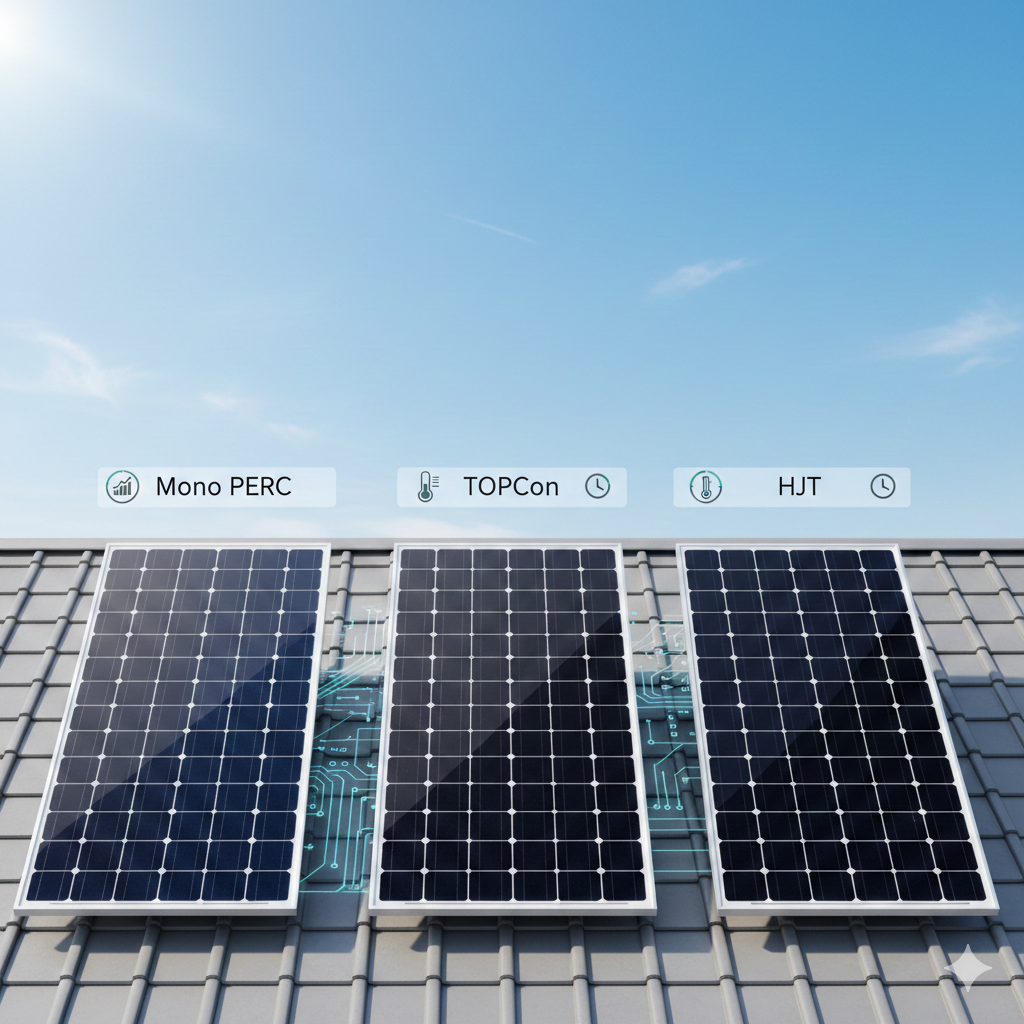
TOPCon, short for Tunnel Oxide Passivated Contact, is one of the most important developments in the list of Top Solar Technologies 2025. It improves how electrons move inside the solar cell by using a thin oxide layer and a doped silicon layer. This structure reduces electrical losses and increases efficiency.
Why TOPCon Leads in 2025
- Higher efficiency compared with traditional solar cells
- Strong performance in low-light conditions
- Reduced internal losses through advanced passivation
- Better temperature behaviour during hot seasons
- Long lifespan and slow degradation rate
TOPCon stands out in 2025 because it delivers more output without requiring additional installation space. Homeowners and commercial users benefit from higher energy production with the same number of panels.
“TOPCon, short for Tunnel Oxide Passivated Contact , improves the movement of electrons and reduces recombination losses for higher solar efficiency.”
N-Type Solar Cells: A Core Part of Top Solar Technologies 2025
N-type cells are another major highlight in the Top Solar Technologies 2025 group. Unlike P-type cells, N-type wafers contain fewer impurities and resist Light-Induced Degradation (LID), one of the biggest weaknesses of older technology.
Advantages That Make N-Type Critical in 2025
- Exceptionally low degradation
- Better stability under strong sunlight
- Higher voltage and improved conversion efficiency
- Excellent performance in cold, hot or variable climates
- Strong reliability for 25–30 years
Because N-type modules maintain their performance for decades, they are ideal for high-value solar installations that require long-term output.
Bifacial Modules and Their Role in Top Solar Technologies 2025
Bifacial solar modules use both sides to generate electricity. The front side captures direct sunlight, while the rear side absorbs reflected light from surfaces such as tiles, concrete, sand, water or metal roofs.
Why Bifacial Panels Are a Top Solar Technology in 2025
- Increased energy generation per panel
- Higher annual yield across various seasons
- Better compatibility with trackers in solar farms
- Greater efficiency in high-reflection locations
- Lower electricity cost over the lifetime of the system
The ability to generate more energy without increasing panel count makes bifacial technology extremely valuable in 2025.
Combining the Top Solar Technologies 2025
Some of the best modules available today combine all three innovations. An N-type TOPCon bifacial module provides:
- High efficiency
- Strong performance on both the front and rear sides
- Excellent durability
- Low degradation across decades
- Maximum output per square metre
These combined technologies reflect why the industry’s direction is centred around Top Solar Technologies 2025 and why installers are recommending them for nearly every new project type.
Cost and Value Trends in 2025
Costs have changed significantly as more manufacturers adopt these technologies.
TOPCon Cost Benefits
- Slightly higher upfront cost
- Much higher lifetime generation
- Better return on investment for rooftops
N-Type Cost Benefits
- Higher purchase price
- Very slow degradation
- More stable output for 25–30 years
Bifacial Cost Benefits
- Increased land-use efficiency
- Ideal for solar farms and commercial sites
- Lower levelised cost of electricity (LCOE)
When comparing the cost-to-performance ratio, the technologies included in Top Solar Technologies 2025 generally outperform older technologies in both financial savings and total energy output.
Which Top Solar Technologies of 2025 Are Right for You?
For Homeowners
- Choose N-Type TOPCon
- Best for limited roof area
- High energy density ensures maximum output
For Businesses
- Consider TOPCon or Bifacial TOPCon
- Works well on flat roofs
- Provides long-term performance even under partial shade
For Utility Solar Farms
- Bifacial N-Type TOPCon is the preferred choice
- Highest yield
- Lower operating costs and improved annual output
Selecting the right option from the Top Solar Technologies 2025 list depends on installation type, space, climate and energy goals.
Installation Factors to Consider
Each technology requires careful installation to reach its full potential.
Install Tips for TOPCon & N-Type
- Verify ideal voltage configurations
- Consider heat impact on inverter sizing
- Maintain adequate airflow below panels
Install Tips for Bifacial Modules
- Install at greater height for improved rear exposure
- Ensure minimum shading behind panels
- Use reflective surfaces for maximum yield
These steps help ensure the advantages of Top Solar Technologies 2025 translate into real-world performance.
Degradation, Warranty and Reliability
Modern solar warranties now support the long-term reliability of the Top Solar Technologies 2025 options.
You can expect:
- First-year degradation as low as 1%
- Annual degradation around 0.3–0.4%
- Performance warranties of up to 30 years
These improvements guarantee energy stability, making advanced modules superior to older PERC technologies.
The Future Beyond 2025
Even as TOPCon, N-type and bifacial dominate Top Solar Technologies 2025, innovation continues. New technologies such as heterojunction (HJT), tandem cells and perovskite-silicon hybrids may soon challenge the current leaders. However, for the near future, the most proven, efficient and commercially ready solutions remain the three technologies covered in this guide.
Conclusion
Top Solar Technologies 2025 are reshaping the global solar industry by offering higher efficiency, stronger durability and better long-term value. Whether you are installing a rooftop system or designing a mega solar farm, choosing TOPCon, N-type or bifacial modules ensures better output today and greater reliability over decades. These technologies reflect the future of clean energy and make solar investment far more rewarding than ever before.
Also Read : How Net Metering Reduces Your Bill — Step-by-Step