Understanding on-grid vs. off-grid solar systems is essential for anyone planning to switch to solar energy in India. Many homeowners know about solar panels but are unsure about how the system actually works and which type they should choose. The difference between on-grid and off-grid setups decides how your home receives electricity, how much you save, and whether you get backup during power cuts. In this guide, we break down on-grid vs off-grid solar systems in simple language so you can make a confident decision.
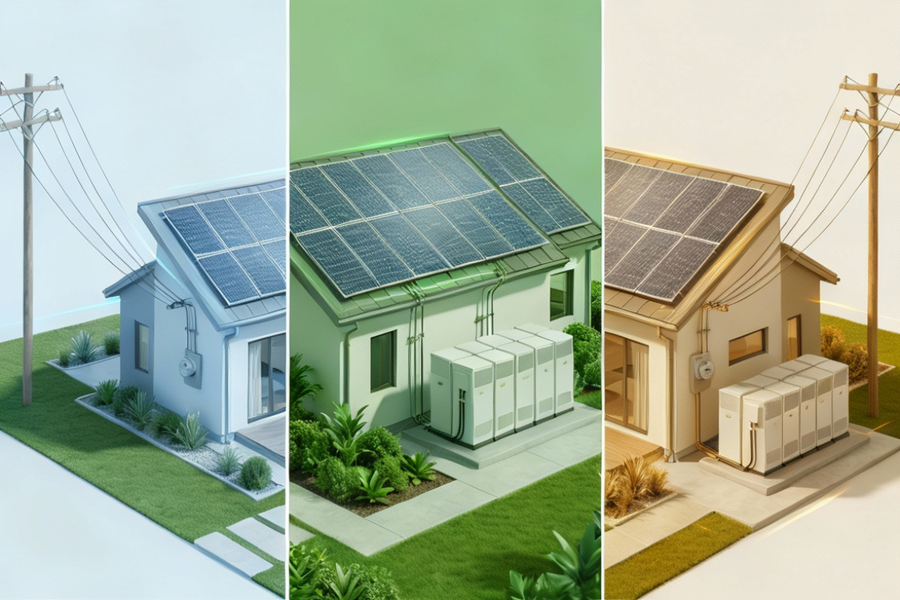
An on-grid system connects your solar panels directly to the government electricity supply. An off-grid system works independently using batteries. Both systems generate solar power, but they operate very differently. Knowing the advantages, disadvantages, and costs of on-grid vs. off-grid will help you select the right system for your home, your lifestyle, and your future energy needs.
Understanding On-Grid Solar Systems in India
An on-grid solar system is the most popular type of solar setup in urban and semi-urban areas. In this system, your solar panels generate power, and your home uses that power first. If extra electricity is produced, it is exported back to the government grid using a net meter. At the end of the month, your electricity bill is calculated by adjusting imported and exported units. This makes on-grid systems extremely cost-effective.
One of the major benefits of an on-grid solar system is that it does not require batteries. Since batteries are the most expensive part of a solar setup, removing them reduces the overall cost. This is why on-grid systems are ideal for people who want maximum savings at a lower investment.
Another benefit is the simplicity of maintenance. There are no batteries to replace, very few components need attention, and most issues can be handled remotely through the inverter’s monitoring app. For homes with reliable electricity and fewer power cuts, on-grid solar systems offer convenience, affordability, and excellent long-term savings.
However, an important limitation must be understood. An on-grid system cannot work during a power cut. This is for safety reasons because electricity cannot be sent to a grid that is temporarily turned off. Even if your solar panels are generating power, the system will automatically shut down.
You can check updated solar policy guidelines on the MNRE website.
Understanding Off-Grid Solar Systems in India
An off-grid solar system works without any connection to the electricity grid. It stores extra solar power in batteries during the day and uses this stored energy during the night or during power cuts. This makes off-grid systems perfect for homes in rural areas, locations with unstable supply, or households that need guaranteed backup.
The biggest benefit of an off-grid system is complete energy independence. You are not affected by blackouts, low voltage, or grid shutdowns. Your home stays powered as long as your batteries have sufficient charge. People living in remote regions or areas with frequent outages often prefer off-grid systems because they ensure constant electricity.
However, off-grid systems are more expensive. Batteries add to the upfront cost and must be replaced every 5 to 7 years depending on usage and quality. They also need more maintenance compared to on-grid systems. If your home uses high-power appliances such as air conditioners, water pumps, or heaters, your battery capacity must be larger, which increases the cost.
Off-grid systems are a great choice when reliability is more important than cost. They provide freedom from electricity fluctuations and offer an uninterrupted supply throughout the day.
Comparing On-Grid vs Off-Grid Solar Systems
When comparing on-grid vs off-grid systems, the first difference is the connection. On-grid systems rely on the government grid, while off-grid systems rely on batteries. This affects cost, performance, and long-term benefits.
In terms of cost, on-grid systems are cheaper because they do not use batteries. Off-grid systems cost more but provide backup, which many homeowners consider essential. In performance, both generate solar power efficiently, but how the power is used differs. On-grid systems save more money, while off-grid systems offer more independence.
On-grid systems are suitable for cities with a stable power supply. Off-grid systems work best in villages, farmhouses, and locations where outages are common. The choice between on-grid vs. off-grid depends on your electricity needs, budget, and local power conditions.
Cost Comparison
On-grid systems are the most affordable. A typical installation costs much less compared to off-grid systems of the same size. Without batteries, maintenance is low and savings are high. Off-grid systems cost more because of battery banks, charge controllers, and additional wiring. While the cost is higher, the benefit is uninterrupted electricity.
Another important factor is government subsidy. Subsidies are usually available only for on-grid systems. Off-grid systems generally do not receive subsidy support. This makes on-grid systems even more cost-effective.
Performance and Reliability
Both systems perform well in terms of power generation because solar panels work the same way. The difference appears in reliability. On-grid systems shut down during power cuts, while off-grid systems keep running thanks to batteries.
Homes that experience frequent outages often cannot rely on on-grid systems alone. On the other hand, homes with a stable supply may not need the additional expense of batteries. Performance also depends on sunlight availability, panel placement, and inverter quality.
Which One Should You Choose?
Choosing between on-grid vs off-grid depends on your lifestyle and location. Choose an on-grid system if your main goal is reducing your monthly electricity bill and you live in an area with a stable supply. Choose an off-grid system if you need backup power and want complete independence from the grid.
If you want both savings and backup, you can also explore hybrid systems that combine the features of both. However, they cost more than both options.
Final Thoughts
Understanding on-grid vs. off-grid solar systems helps you choose the right solution for your home. On-grid systems offer maximum savings and lower cost. Off-grid systems offer complete independence and backup power. The right choice depends on your budget, electricity usage, and the reliability of your local grid.
Also Read : 5kW Solar Price India 2025: Complete Cost, Subsidy & Savings.