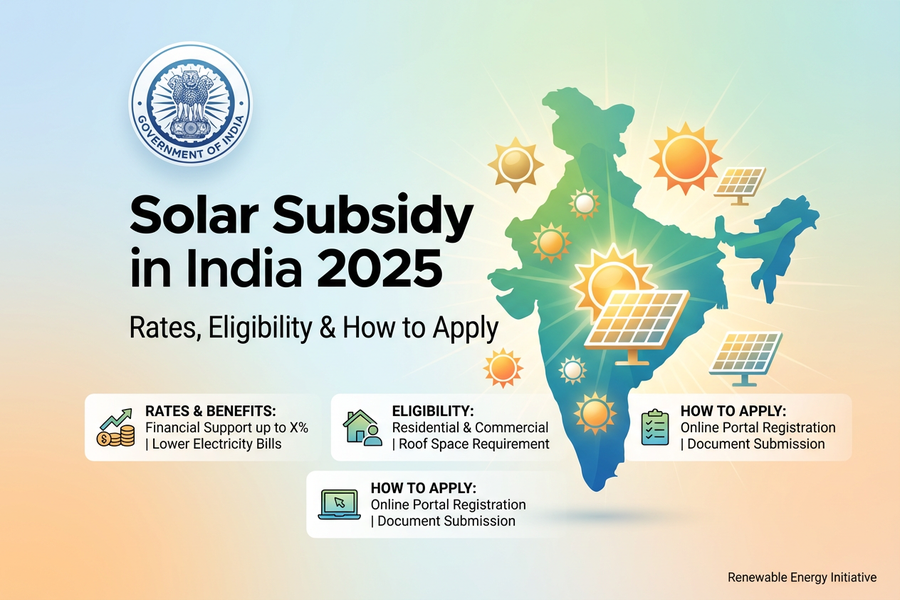
The solar subsidy in India 2025 is one of the biggest reasons homeowners are shifting to rooftop solar, as it reduces the installation cost and makes clean energy affordable for every family. With rising electricity bills and the government’s push for renewable power, understanding the updated subsidy rates, eligibility rules, and application process is essential before installing a solar system.
This complete guide explains everything about Solar Subsidy in India 2025, including how much subsidy you can get, who can apply, and how the entire process works from start to finish.
Understanding Solar Subsidy in India 2025
A solar subsidy is financial assistance provided by the Central Government to reduce the upfront cost of installing a rooftop solar system. These subsidies encourage households to shift from traditional electricity to clean and renewable solar power.
In 2025, the government continues offering subsidies through the PM Surya Ghar Scheme, making solar highly affordable for common households. When combined with state benefits, this subsidy can bring down solar installation costs by 30–60%, depending on the system size and location.
The subsidy is credited directly into the homeowner’s bank account once the installation and inspection are completed.
Updated Solar Subsidy Rates in India 2025
The Central Government has standardised the subsidy amount across all states under the national rooftop solar programme. The subsidy is offered based on the capacity of the system installed.
Below are the latest updated subsidy rates for 2025:
● 1 kW Solar System – ₹30,000 Subsidy
Ideal for small homes with limited power needs.
● 2 kW Solar System – ₹60,000 Subsidy
Suitable for small to medium homes.
● 3 kW Solar System – ₹78,000 Subsidy (Maximum subsidy limit)
This is the highest subsidy slab. Whether your system is 3 kW, 4 kW or 10 kW, the subsidy remains capped at ₹78,000.
For systems above 3 kW – Subsidy fixed at ₹78,000
Even if you install a 5 kW or 10 kW system, the maximum subsidy offered by the government is ₹78,000.
These rates make rooftop solar extremely economical, and the payback period for most homes reduces significantly to 3–5 years.
Who Is Eligible for Solar Subsidy in India in 2025?
Not everyone qualifies for solar subsidy. The government has clear eligibility rules to ensure only genuine residential users benefit. You are eligible if you meet the following criteria:
1. You are a residential property owner
Only homeowners or legal occupants can apply. Commercial and industrial users are not eligible for central subsidies.
2. You install a rooftop solar system
Ground-mounted systems or farms do not qualify.
3. Your solar panels and inverter must be MNRE-approved
Only components approved by the Ministry of New and Renewable Energy are accepted.
4. You install through a registered vendor
The vendor or installer must be listed on the National Portal for Rooftop Solar.
5. You have a valid electricity connection
The connection should be in your name or your family’s name.
6. Net-metering must be completed
Subsidy is released only after the net meter is successfully installed.
If you meet all the above conditions, you can easily apply for a solar subsidy in 2025.
Benefits of Solar Subsidy for Homeowners
The government subsidy reduces the initial cost of solar installation, making it affordable for Indian families. But the benefits go far beyond just cost reduction.
● Lower installation cost
A subsidy of up to ₹78,000 significantly reduces the total cost of rooftop solar.
● Faster return on investment
Most homes start seeing savings from the first month, with the payback period reducing to just a few years.
● Zero electricity bills
Homes with 3–5 kW systems can generate enough power to eliminate their monthly electricity bill entirely.
● Increased property value
Homes with solar installed often see 3–5% higher property value.
● Long-term savings
Solar panels last 25+ years, ensuring decades of free electricity.
● Environment-friendly
A 3 kW system reduces nearly 3–4 tonnes of carbon emissions every year.
These benefits make rooftop solar one of the smartest financial and environmental choices for Indian households.
How to Apply for Solar Subsidy in India 2025
The government has made the subsidy application process 100% online through the National Portal for Rooftop Solar. The steps are straightforward, and the process is transparent and trackable.
Here is the complete step-by-step guide:
Step 1: Register on the National Portal
Visit the National Rooftop Solar Portal and create an account using your mobile number, email ID, and electricity consumer number.
Step 2: Submit your rooftop solar application
Provide details such as your address, electricity load, and the proposed capacity of the solar system.
Step 3: Choose an approved vendor
Select an MNRE-approved vendor from the portal. Only these vendors are eligible for subsidy installation.
Step 4: Install the rooftop solar system
Your vendor will survey your site, design the system, and install MNRE-approved panels, inverters, and structures.
Step 5: Apply for net metering.
Your electricity distribution company will install a bidirectional meter that measures both import and export of power.
Step 6: System inspection and approval
A DISCOM officer will visit your home and verify the installation.
Step 7: Receive subsidy directly in your bank account
Once the inspection is approved, the subsidy amount is transferred to your account within 30–60 days.
This online system eliminates middlemen and ensures transparency.
Documents Required for Solar Subsidy in 2025
The document list is simple:
- Aadhaar card
- PAN card
- Latest electricity bill
- Bank account details
- Proof of property ownership
- Passport-size photograph
- Installation photographs (uploaded by vendor)
Your vendor usually helps you with uploading all required documents.
Cost After Solar Subsidy in 2025
Here is an estimated idea of how much you can save:
Cost of 3 kW System (before subsidy): ₹1.50 lakh
Subsidy: ₹78,000
Final cost: approx. ₹72,000
Cost of 5 kW System (before subsidy): ₹2.50 lakh
Subsidy: ₹78,000
Final cost: approx. ₹1.72 lakh
This makes solar extremely affordable for average Indian families.
Why Installing Solar in 2025 Is the Best Decision
With electricity costs rising every year and government support at its peak, 2025 is one of the best years to shift to rooftop solar. The subsidy significantly reduces installation cost, and the long-term benefits are huge.
Moreover, solar power protects you from future electricity price hikes. A properly installed rooftop solar system gives you reliable, clean, and almost free electricity for 25+ years.
Tips to Maximise Your Solar Subsidy Benefits
To get the most out of your solar investment:
- Choose the right system size based on monthly electricity usage
- Install high-quality, MNRE-approved panels
- Keep your rooftop shadow-free
- Clean the panels once every 15–20 days
- Monitor system output regularly
- Ensure your installer is registered on the National Portal
These small steps help you achieve maximum efficiency and savings.
Conclusion
The solar subsidy in India 2025 offers a fantastic opportunity for homeowners to reduce solar installation costs and enjoy free electricity for years. With updated subsidy rates, a simple eligibility process, and an easy online application system, going solar has never been easier. Whether you plan to install a 1 kW system or a 5 kW rooftop setup, the government’s subsidy can make the investment highly economical and rewarding.
If you are planning to install solar in 2025, this is the perfect time to take action and start saving on your electricity bills while contributing to a greener India.
Also Read: Why Solar Is the Best Investment for Indian Families in 2025