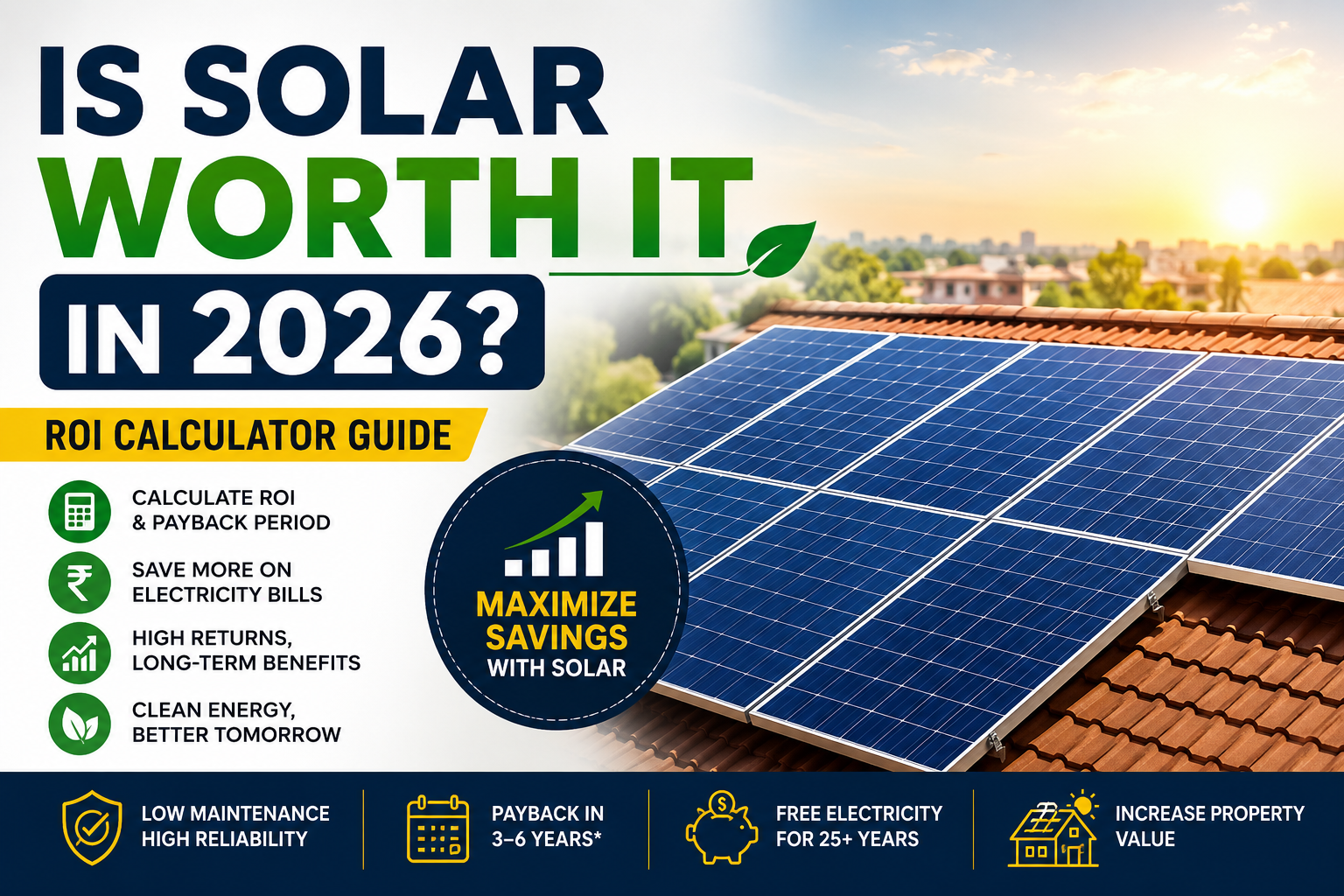
The future of solar in India is more promising than ever. With rising energy needs, supportive government policies and fast-growing technology adoption, solar power has become one of the strongest pillars of India’s clean-energy transition. The country is moving quickly towards sustainable growth, and solar energy is at the centre of this shift. In this blog, we will explore the future of solar in India, the opportunities, the challenges and the reasons why solar will transform the nation’s energy landscape in the coming years.
India’s Rapid Growth in Solar Energy
India has already made impressive progress in solar installation over the last decade. Solar has become the fastest-growing renewable energy source in the country. Large-scale solar parks, rooftop solar systems, open-access projects and floating solar farms are expanding across states. Every year, new solar capacity is added at a record pace.
This continuous growth has created confidence among industries, businesses and households. Solar energy is no longer seen as an optional investment, but as a strategic choice for long-term savings and sustainable operations. With lower installation costs and improved technologies, more people are considering solar as their main source of power.
Government Support Strengthens the Future of Solar in India
Policies play a major role in shaping the future of solar in India. The Indian government has launched several initiatives to promote renewable energy adoption. Some of the key steps include:
- Production Linked Incentive (PLI) schemes for boosting solar manufacturing
- Solar Parks Scheme to develop large-scale solar projects across states
- Rooftop Solar Programme Phase-II for residential and commercial buildings
- Green energy corridor projects to improve transmission infrastructure
- Net-metering policies to support consumers who want to generate and use their own solar power
These initiatives show the government’s commitment to expanding solar capacity and reducing the country’s dependency on fossil fuels. When policy support is strong and consistent, the future of solar in India becomes even more secure.
Lower Solar Costs Will Drive Mass Adoption
One of the biggest reasons the future of solar in India looks strong is the rapid fall in solar installation and generation costs. Over the past few years, the price of solar panels, inverters and storage solutions has reduced significantly. At the same time, solar equipment has become more efficient and durable.
Lower costs benefit every segment:
- Households save money on electricity bills.
- Businesses reduce operational costs and improve sustainability.
- Industries gain energy independence and avoid power cuts.
- Investors see solar as a profitable long-term asset.
As technology continues improving, solar will become even more affordable, making it the preferred energy choice across the country.
Rooftop Solar Will Lead the Next Wave of Growth
Rooftop solar has huge potential in India. Millions of residential buildings, commercial properties and factories have unused rooftops that can generate power. With simplified policies, easy financing and growing awareness, rooftop solar adoption is expected to rise sharply in the next few years.
For households, rooftop solar can cut monthly electricity bills by 70% to 90%. For businesses and industries, it ensures uninterrupted power and reduces reliance on the grid. With smart meters and flexible net-metering rules, rooftop solar will become an essential part of India’s renewable future.
Solar + Storage: The Future of Reliable Clean Energy
Energy storage will play a key role in the future of solar in India. Battery prices are decreasing globally, and new technologies like lithium-ion and sodium-ion batteries are becoming more efficient.
Solar combined with battery storage helps solve major challenges such as:
- Power cuts
- Fluctuations in grid supply
- Night-time electricity demand
- Backup for industries and businesses
In the coming years, solar + storage systems will become common across factories, offices, hospitals and residential buildings. This combination creates a stable, reliable and clean energy source for everyone.
Open-Access Solar: A Big Boost for Industries
Open-access solar allows industries and businesses to buy power directly from solar plants at much lower rates than grid electricity. This model has gained popularity because it reduces dependence on fossil-fuel-based power and cuts energy costs by up to 40%.
Many companies now prefer open-access solar because it offers flexibility, scalability and long-term savings. As more states simplify open-access regulations, the segment is expected to grow rapidly and play a major role in India’s industrial energy transition.
Solar Manufacturing Will Make India a Global Leader
The future of solar in India will be shaped strongly by local manufacturing. With government incentives, Indian companies are increasing production of:
- Solar cells
- Solar modules
- Inverters
- Batteries
- EV charging equipment
Becoming self-reliant in solar manufacturing will lower import costs, create jobs and make India a global hub for renewable technology. This shift will support faster adoption and ensure that solar becomes a permanent part of the energy ecosystem.
Rural India Will Benefit Immensely From Solar
Solar power is transforming rural areas by providing clean and reliable electricity. Solar pumps, micro-grids and solar streetlights are already helping villages reduce diesel usage and improve productivity. Farmers are increasingly adopting solar-powered irrigation systems, which cut fuel costs and support sustainable agriculture.
In the future, rural solar solutions will expand even more, bringing power to remote locations where traditional grid connections are difficult.
Challenges That Need Attention
While the future of solar in India is promising, certain challenges must be addressed:
- Land acquisition issues for large projects
- Variations in state policies
- Need for improved grid infrastructure
- Skilled workforce requirements
- Financial awareness among households
Solving these challenges will speed up adoption and create a more stable solar industry.
Why the Future of Solar in India Is Unstoppable
Several factors together make the growth of solar in India inevitable:
- High energy demand
- Falling solar prices
- Better manufacturing capacity
- Strong policy support
- Rising climate awareness
- Improved financing options
- Technological innovation
- Corporate sustainability goals
Solar power is no longer just an alternative—it is becoming the backbone of India’s future energy plan. Every sector—from homes to industries—is moving towards clean energy, and solar is leading this transformation.
Conclusion
The future of solar in India is bright, powerful and full of potential. With increasing installation, supportive government policies, better technology and expanding awareness, solar energy will continue shaping India’s growth story. It will reduce energy costs, strengthen environmental sustainability and support the nation’s goal of becoming a global clean-energy leader.
As India continues embracing renewable energy, solar will remain at the forefront of this transition, lighting up millions of homes, powering industries and building a sustainable future for the next generation.
According to the latest updates from the Ministry of New and Renewable Energy (MNRE), India’s solar adoption continues to accelerate.
Also Read : Panels Needed for 1 2 3 BHK – Complete Home Solar Guide.