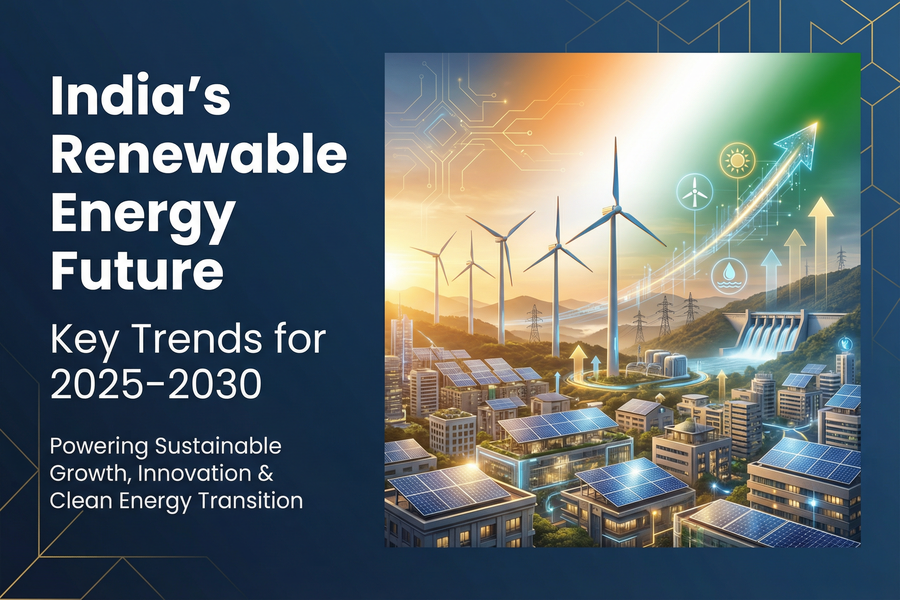
India’s renewable energy future is entering an exciting phase of growth and transformation. With rising electricity demand, cleaner technologies, and strong national commitments, the country is shifting rapidly toward sustainable power. Over the next five years, solar, wind, energy storage, hydrogen, and electric mobility will reshape how India generates and uses electricity. This clean-energy transition is not only essential for the environment but also for long-term economic stability and energy security.
A Strong Foundation for India’s Renewable Energy Future
India has spent the last decade building a strong base for renewable-energy expansion. Solar and wind have grown dramatically, manufacturing has improved, and clean-energy projects have become more affordable. This foundation ensures India is ready for the next stage of large-scale adoption, innovation, and decentralisation. Falling technology costs, increased awareness, and better financing options have made renewable power more accessible to homes, businesses, and industries.
Solar and Wind Will Lead India’s Green Transition
Solar energy will remain India’s fastest-growing renewable source through 2030. Large solar parks, improved rooftop systems, and floating solar plants will expand capacity across states. Wind energy—especially in coastal regions—will also see strong growth in both onshore and offshore projects.
Together, solar and wind will contribute the majority of new clean-energy capacity in the next five years, helping India reduce dependence on fossil fuels and stabilise long-term electricity prices.
Energy Storage Will Strengthen Clean Power Reliability
As renewable capacity grows, energy storage becomes essential. Storage ensures that renewable power continues even when sunlight or wind is low. Between 2025 and 2030, India will expand:
- Battery storage systems
- Pumped hydro storage
- Hybrid solar–wind projects
- Smart grid and advanced metering
These technologies will make renewable power more stable, reliable, and suitable for large-scale integration into the national grid.
Rooftop Solar Will Transform Homes and Small Businesses
Rooftop solar adoption is rising quickly as families look for ways to reduce electricity bills and become more energy independent. Improved panel efficiency, simple installation processes, better financing options, and faster payback periods have made rooftop systems highly attractive.
Homes, apartments, shops, and schools are expected to contribute significantly to renewable growth by 2030 through decentralised rooftop installations.
Green Hydrogen Will Support Hard-to-Decarbonise Sectors
Green hydrogen will become one of India’s most important clean-energy tools in heavy industries like steel, cement, chemicals, and fertilisers. It provides a clean alternative to fossil-fuel-based industrial processes and supports the country’s long-term climate goals.
Between 2025 and 2030, India will increase hydrogen production capacity, build storage and distribution networks, and develop new applications in transportation and manufacturing.
Electric Mobility Will Expand Clean-Energy Demand
Electric vehicles will play a major role in reducing emissions from transportation. Solar-powered charging stations, fast-charging networks, and battery-swapping systems will expand across cities and highways.
Two-wheelers, three-wheelers, buses, logistics fleets, and private cars will gradually shift to electric mobility, contributing to cleaner air and reduced oil dependence.
Growing Green Jobs and Manufacturing Opportunities
The renewable-energy sector is one of India’s fastest-growing job creators. Manufacturing solar modules, wind components, batteries, and hydrogen equipment will generate millions of jobs across engineering, construction, research, logistics, and maintenance.
Domestic production will reduce imports, strengthen the economy, and position India as a global clean-energy manufacturing hub by 2030.
Policies Strengthening India’s Clean-Energy Vision
Government initiatives and regulations will play a major role in shaping India’s green future. Policies will focus on:
- Expanding rooftop solar programs
- Supporting domestic manufacturing
- Incentivising green hydrogen
- Improving EV infrastructure
- Increasing renewable purchase obligations
- Modernising grids and metering
- Promoting large-scale storage
These policies will support affordability, innovation, and rapid expansion.
Why India’s Clean-Energy Future Matters
India’s shift toward renewable power brings powerful benefits:
✔ Lower electricity costs
Solar and wind help reduce long-term energy expenses.
✔ Cleaner environment
Reduced emissions improve public health and air quality.
✔ Stronger energy security
Less dependence on imported fuels.
✔ Large-scale job creation
Millions of jobs in manufacturing and installation.
✔ Reliable power supply
Storage and smart grids reduce outages.
✔ Economic competitiveness
Clean energy strengthens industrial growth and global positioning.
Conclusion: A Bright and Sustainable Path Ahead
India’s renewable-energy journey from 2025 to 2030 will redefine the country’s power sector. Solar, wind, storage systems, hydrogen, rooftop technologies, and electric mobility will all contribute to a cleaner, more secure, and more cost-effective energy system. With strong policies, expanding manufacturing, and growing public awareness, India is well-positioned to become a global leader in renewable-energy innovation.
The transition is clear: a more sustainable, reliable, and affordable energy future is already underway.
Global clean-energy trends show similar growth patterns, according to the International Energy Agency
Also Read : Solar Subsidy in India 2025 – Rates, Eligibility & How to Apply