Myths About Solar Panels in India – Truth vs Reality
Myths about solar panels in India stop thousands of homeowners and businesses from making one of the smartest long-term investments available today. Despite falling prices, government support, and rising electricity tariffs, many people still hesitate because of outdated beliefs, half-truths, or misinformation.
In reality, solar energy has matured significantly in India. Modern rooftop solar systems are more efficient, reliable, and cost-effective than ever before. This article breaks down the most common myths about solar panels in India and explains the real truth behind them, helping you make a confident, informed decision.
Myth 1: Solar Panels Are Too Expensive for Indian Homes
Reality: Solar has become affordable and offers one of the fastest payback periods among home investments.
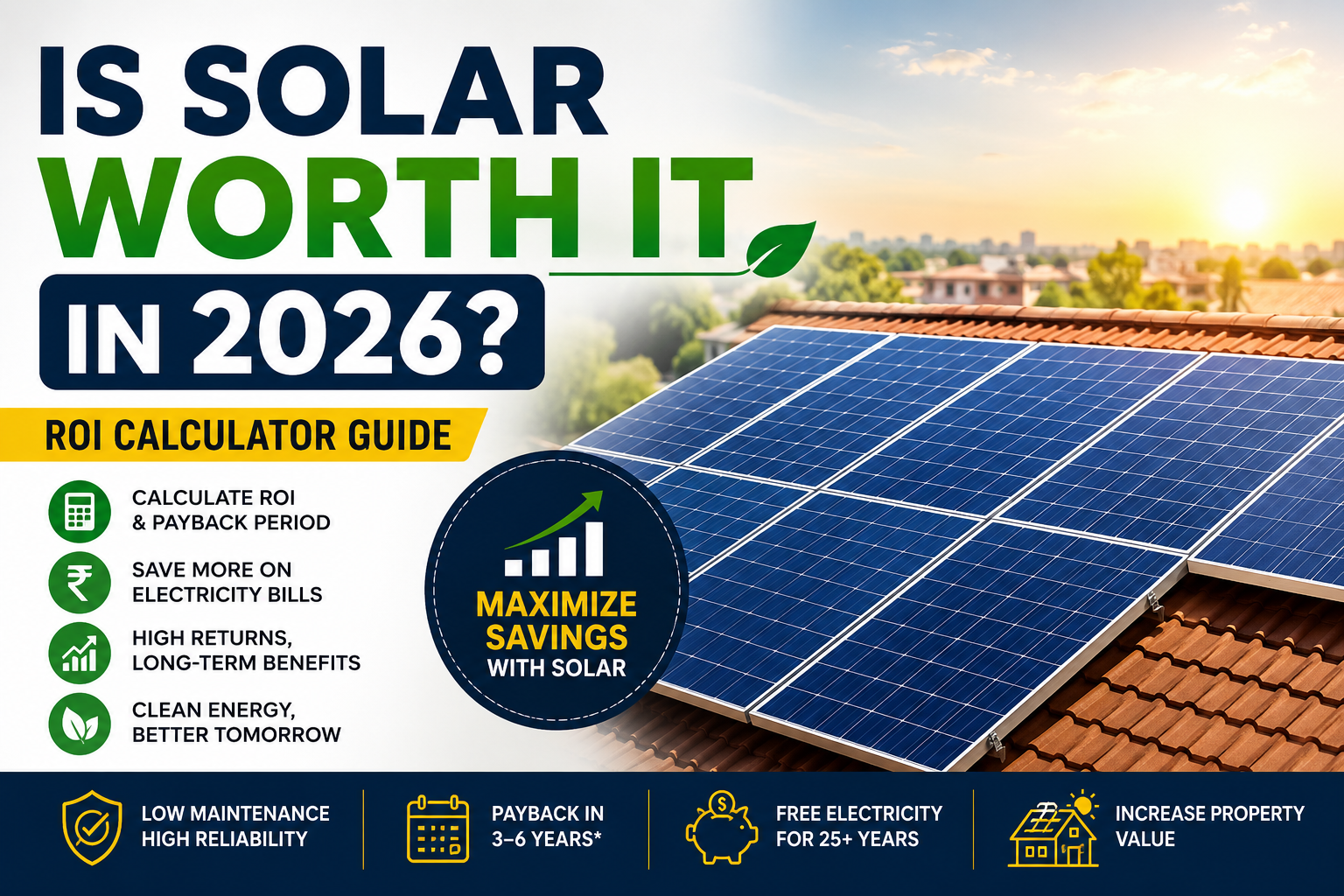
This is one of the most common myths about solar panels in India. While the upfront cost may seem high, the long-term savings far outweigh the initial investment. A typical residential solar system recovers its cost within 4 to 6 years, while the system itself lasts 25 years or more.
Electricity tariffs increase almost every year, but your solar-generated power remains free. Once the payback period is over, you effectively enjoy decades of low-cost electricity. When calculated properly, solar is not an expense—it is a hedge against rising power bills.
Myth 2: Solar Panels Do Not Work During Monsoon or Winter
Reality: Solar panels generate electricity even on cloudy days.
Many people believe solar panels need harsh sunlight to function. In reality, solar panels work on daylight, not heat. They continue producing power during cloudy weather, rain, and winter—though output may reduce slightly.
Modern panels are designed to perform efficiently in varied Indian weather conditions. In fact, extremely high temperatures can slightly reduce efficiency, while cooler conditions often improve performance. Seasonal variations are already factored into professional solar system design.
Myth 3: Solar Panels Cannot Run Heavy Appliances Like AC or Geysers
Reality: Solar systems can power all household appliances if sized correctly.
This myth arises from poor system design, not from solar limitations. A well-designed solar system can comfortably run air conditioners, refrigerators, washing machines, geysers, and even EV chargers.
The key lies in accurate load calculation and proper inverter selection. When your energy usage is analysed correctly, solar can easily support modern lifestyle needs without compromise.
Myth 4: Solar Panels Require High Maintenance
Reality: Solar systems are almost maintenance-free.
Another major myth about solar panels in India is that they require frequent and costly maintenance. In reality, solar panels have no moving parts. Basic cleaning once every few weeks to remove dust is usually sufficient.
Most quality panels come with 25-year performance warranties, and inverters typically require minimal attention. Compared to other home infrastructure systems, solar maintenance is negligible.
Myth 5: Solar Panels Damage the Roof
Reality: Professional installation protects and often strengthens your roof.
When installed by trained professionals, solar panels do not damage the roof. In fact, proper mounting structures distribute weight evenly and protect roof surfaces from direct exposure to sun and rain.
Problems only arise when untrained installers use poor-quality mounting or incorrect drilling methods. A professional site survey and correct installation eliminate this risk entirely.
Myth 6: Solar Panels Stop Working During Power Cuts
Reality: It depends on the type of solar system you install.
This myth stems from confusion between on-grid, off-grid, and hybrid systems. On-grid systems shut down during power cuts for safety reasons. However, hybrid and off-grid systems continue to supply power using batteries.
If power backup is important to you, solar systems can be designed to provide uninterrupted electricity during outages. The solution lies in choosing the right system, not avoiding solar altogether.
Myth 7: Solar Panels Are Only Suitable for Large Houses
Reality: Solar can be customised for small roofs and apartments.
Many people believe solar is only viable for large independent houses. In reality, solar systems are scalable and can be installed even on limited roof space.
For apartments and housing societies, shared or group solar installations are increasingly popular. Even small systems can significantly reduce common area electricity bills.
Myth 8: Solar Subsidies Are Too Complicated and Not Worth It
Reality: Subsidy processes are structured and manageable with the right guidance.
Government subsidies for rooftop solar are often perceived as complex. While documentation is required, the process is streamlined when handled by experienced solar companies.
More importantly, solar viability should not depend only on subsidies. Even without incentives, solar remains financially attractive due to long-term savings and rising grid electricity costs.
Myth 9: Solar Technology Becomes Obsolete Quickly
Reality: Solar systems are designed for long-term reliability, not frequent upgrades.
Unlike consumer electronics, solar panels do not become outdated every few years. Improvements in technology are incremental, not disruptive.
A good-quality solar system installed today will continue producing reliable energy for decades. Waiting endlessly for “better technology” often results in missed savings.
Myth 10: Solar Panels Reduce Property Value
Reality: Solar increases property value and buyer appeal.
Homes with solar installations are increasingly seen as premium properties. Lower electricity bills, energy independence, and sustainability make solar-equipped homes more attractive to buyers.
Rather than reducing value, solar enhances long-term property desirability—especially as energy costs continue to rise.
Why These Myths About Solar Panels in India Persist
Most myths about solar panels in India originate from outdated information, poor-quality installations, or misleading marketing. Early solar adopters faced higher costs and limited options, which shaped negative perceptions that no longer apply today.
With improved technology, better regulations, and professional installers, solar has become a mainstream, reliable solution for Indian households and businesses.
The Truth About Going Solar in India Today
The reality is simple: solar energy is no longer experimental or risky. It is a proven, long-term solution to rising electricity costs and power uncertainty. When designed and installed correctly, solar systems deliver predictable savings, minimal maintenance, and energy security.
The biggest risk today is not installing solar—it is delaying the decision while electricity prices continue to climb.
Final Thoughts
Understanding the truth behind common myths about solar panels in India is crucial before making an investment decision. Solar is not just about saving money; it is about control, reliability, and future-proofing your energy needs.
If you rely on facts instead of misconceptions, solar emerges as one of the smartest financial and lifestyle upgrades available today.
According to guidelines issued by the Ministry of New and Renewable Energy MNRE rooftop solar systems in India are supported through structured policies and long-term renewable energy targets.
Also Read : Payback Period of Solar in 2025: How Long Does It Really Take?