Introduction
The global renewable energy sector is experiencing one of the most transformative periods in its history. As the world moves closer to 2026, priorities surrounding energy generation are no longer driven solely by climate commitments. Instead, a powerful combination of energy security, economic stability, technological demand, and geopolitical strategy is reshaping the future of power generation.
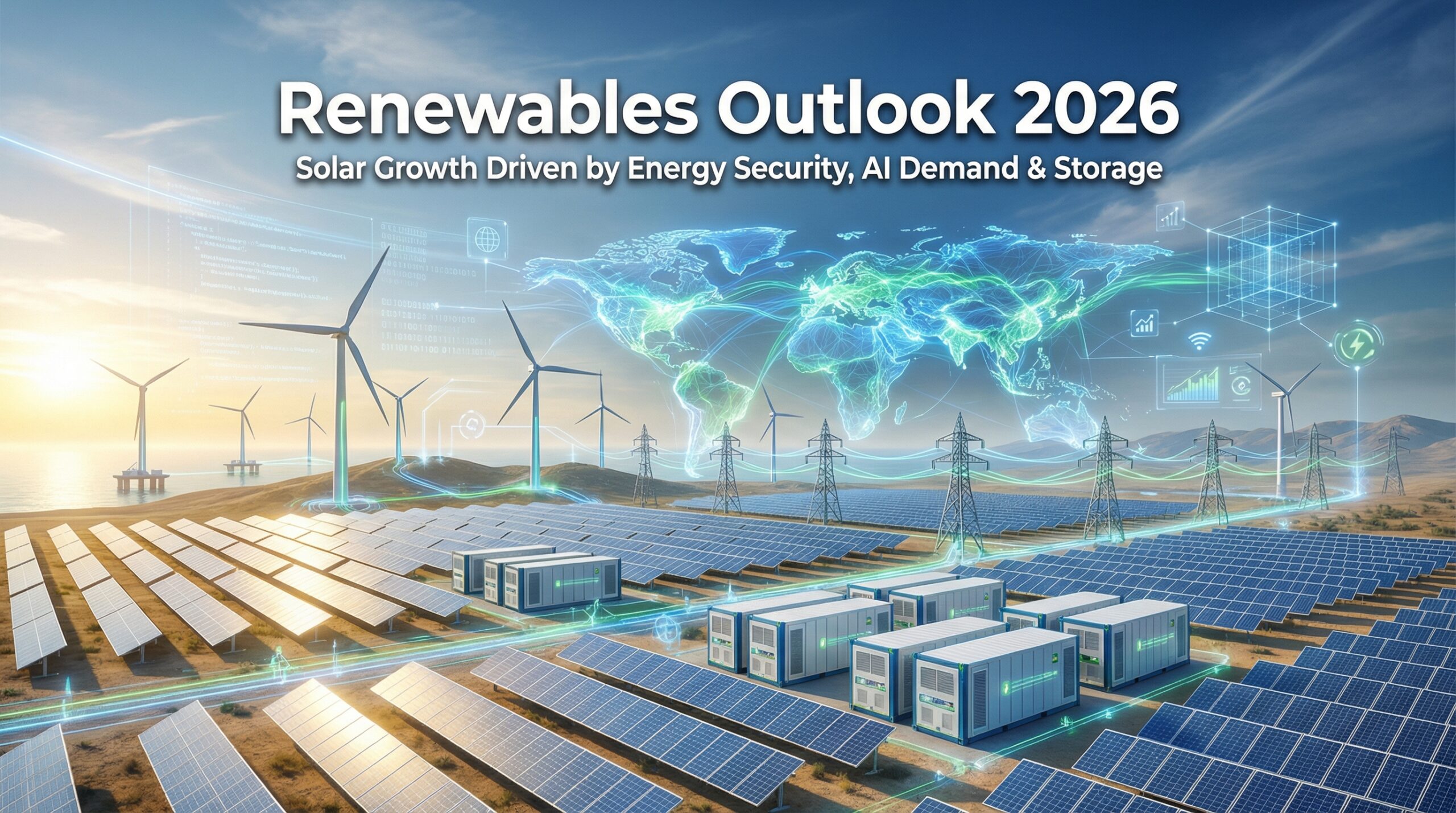
According to the ING Renewables Outlook 2026, growth in renewable energy — particularly solar — will accelerate significantly due to shifting global priorities. Governments, corporations, and investors are now viewing renewables not as optional sustainability initiatives, but as essential infrastructure for national security and economic competitiveness.
Among all clean energy sources, solar power stands at the centre of this transformation.
The Global Energy Landscape in 2026
The global energy system is undergoing structural change at an unprecedented pace.
Several major developments define the current landscape:
- Rising electricity demand after global economic recovery
- Electrification of transport and industry
- Explosion of data centres and artificial intelligence workloads
- Increasing geopolitical uncertainty in fossil fuel markets
- Rapid decline in renewable technology costs
In this environment, traditional energy models are proving inadequate.
Countries are recognising that reliance on imported fossil fuels exposes economies to price volatility, supply disruptions, and political risk. This has forced a rethinking of energy policy across every major region.
Why Renewable Energy Priorities Are Changing
Until recently, renewable energy growth was primarily driven by climate commitments and emissions targets. While these remain important, the motivation has evolved.
The new priorities include:
- Energy independence
- Stable long-term electricity pricing
- Support for domestic manufacturing
- Power supply for digital economies
- National security considerations
Renewables now serve strategic goals far beyond decarbonisation.
Solar energy, in particular, offers unmatched advantages:
- Fast deployment timelines
- Modular scalability
- Low operating costs
- Minimal water usage
- Compatibility with storage systems
These benefits position solar as the backbone of future electricity systems.
Solar Power: The Fastest-Growing Energy Source Worldwide
Solar energy continues to outperform all other power generation technologies.
According to multiple international forecasts:
- Solar capacity additions are expected to grow by over 20% annually through 2026
- More solar capacity will be installed globally than coal, gas, wind, and nuclear combined
- Utility-scale and rooftop installations are expanding simultaneously
Solar has become the cheapest form of new electricity generation in most regions of the world.
This cost advantage, combined with technological improvements, ensures solar remains the preferred choice for both governments and private investors.
Key Drivers Fueling Solar Industry Growth in 2026
Several powerful forces are converging to drive the solar boom:
1. Energy Security
Nations are prioritising locally produced electricity to reduce dependence on fuel imports.
2. Electrification
Electric vehicles, heat pumps, and green hydrogen are increasing electricity demand.
3. Corporate Sustainability Goals
Multinational corporations are signing long-term solar power purchase agreements (PPAs).
4. Falling Technology Costs
Solar module prices have dropped more than 90% over the past decade.
5. Battery Storage Expansion
Storage allows solar to deliver reliable, round-the-clock energy.
The Role of Energy Security in Accelerating Solar Adoption
The global energy crisis of recent years exposed vulnerabilities in fossil fuel supply chains.
As a result:
- Europe accelerated renewable targets by several years
- Countries increased domestic generation goals
- Long-term gas dependency declined sharply
Solar power emerged as the most practical solution because it can be deployed faster than any other large-scale energy source.
Unlike nuclear or fossil projects, solar plants can be commissioned within months rather than decades.
AI, Data Centres and the New Electricity Demand Wave
One of the most important trends shaping solar growth in 2026 is the rapid expansion of artificial intelligence.
AI infrastructure requires enormous amounts of electricity:
- Cloud computing
- Data storage
- Machine learning models
- Cryptocurrency and blockchain systems
Major technology companies are now some of the world’s largest renewable energy buyers.
Solar energy offers them:
- Predictable long-term pricing
- Low carbon intensity
- Rapid scalability near data centre locations
This new demand is transforming electricity markets globally.
Battery Energy Storage Systems (BESS): Solar’s Perfect Partner
Solar plus storage is one of the most powerful trends of 2026.
Battery systems allow solar power to:
- Operate beyond daylight hours
- Provide grid stability services
- Reduce curtailment losses
- Replace peaker fossil fuel plants
As battery prices continue to decline, hybrid solar-storage projects are becoming the industry standard rather than the exception.
Many new utility-scale solar plants are now designed with co-located storage from day one.
Technology Advancements Transforming Solar Power
Innovation continues to strengthen solar’s competitive advantage.
Key technological trends include:
- Bifacial solar modules generating power from both sides
- TOPCon and HJT cells improving efficiency beyond 24%
- Perovskite-silicon tandem cells promising future breakthroughs
- AI-driven monitoring systems maximising plant output
- Floating solar installations using reservoirs and lakes
These advancements increase energy yield while reducing land and maintenance requirements.
Regional Solar Market Outlook
🌏 China
- World’s largest solar manufacturer and installer
- Dominates global module supply chain
- Rapid domestic deployment continues
- Focus on large desert solar bases
China remains the undisputed solar superpower.
🇪🇺 Europe
- Accelerated renewable targets
- Rooftop solar incentives expanded
- Grid modernisation underway
- Strong solar-storage integration
Europe views renewables as a matter of national resilience.
🇺🇸 United States
- Strong growth under industrial policy support
- Domestic manufacturing expansion
- Corporate solar procurement booming
- Large utility-scale pipeline
Solar is now America’s fastest-growing power source.
🌍 Emerging Markets
- India, Southeast Asia, Middle East and Africa driving new demand
- Rapid urbanization is increasing electricity needs
- Solar offers lowest-cost generation
- Off-grid and hybrid systems expanding
These regions represent the next trillion-dollar solar opportunity.
Challenges Facing the Global Solar Industry
Despite strong growth, challenges remain.
Key issues include:
- Grid congestion and connection delays
- Transmission infrastructure shortages
- Trade tariffs and geopolitical risks
- Skilled workforce shortages
- Permitting and land acquisition delays
Addressing these barriers will be essential to sustain long-term expansion.
Financing Trends and Investor Confidence
Investor appetite for renewable energy remains strong.
Solar projects benefit from:
- Predictable long-term cash flows
- Stable operating costs
- Increasing institutional support
- ESG-aligned investment mandates
Global renewable investment is expected to exceed USD 2 trillion annually before 2030, with solar capturing the largest share.
Corporate Renewable Procurement Growth
Major corporations are committing to 100% renewable electricity targets.
Solar PPAs allow companies to:
- Hedge against volatile power prices
- Meet sustainability goals
- Improve brand reputation
- Secure long-term energy supply
This corporate demand is now a key driver of new solar capacity worldwide.
Solar Industry Forecast Beyond 2026
Looking ahead:
- Solar capacity is expected to triple by 2035
- Storage deployment will grow even faster
- Digital energy management will expand
- Decentralised power systems will increase
Solar will not merely complement existing energy systems — it will define them.
What This Means for Solar Businesses
For companies operating in the solar ecosystem, 2026 presents enormous opportunity.
Growth areas include:
- EPC services
- Battery integration
- O&M digitalisation
- Rooftop solar expansion
- Commercial and industrial installations
Businesses that adapt early will benefit most.
Future of Solar Jobs and Skills
The renewable sector is becoming a major employment generator.
High-demand roles include:
- Solar engineers
- Project managers
- Storage specialists
- Grid integration experts
- AI energy analysts
The solar workforce is expected to grow steadily through the next decade.
Why 2026 Will Be a Turning Point for Renewables
Unlike previous years, renewable growth in 2026 is supported by:
- Economic logic
- National security strategy
- Technological necessity
- Corporate investment demand
This combination makes the transition irreversible.
Solar energy has moved beyond ideology — it is now the foundation of modern power systems.
Conclusion
The Renewables Outlook 2026 confirms a powerful truth:
The global energy transition is no longer driven only by climate goals — it is being propelled by shifting economic, technological and geopolitical priorities.
Solar energy stands at the centre of this transformation.
With falling costs, expanding storage, rising electricity demand and strong policy backing, solar power is set to dominate the global energy mix for decades to come.
For governments, businesses, investors and consumers alike, one message is clear: