India’s renewable energy journey is entering a new and powerful phase, and Rajasthan is leading from the front. Known for its vast desert landscape and abundant sunlight, the state has already established itself as a solar powerhouse. Now, with a bold move toward large-scale energy storage, Rajasthan is preparing to solve one of the biggest challenges in renewable energy how to store solar power efficiently and use it when needed.
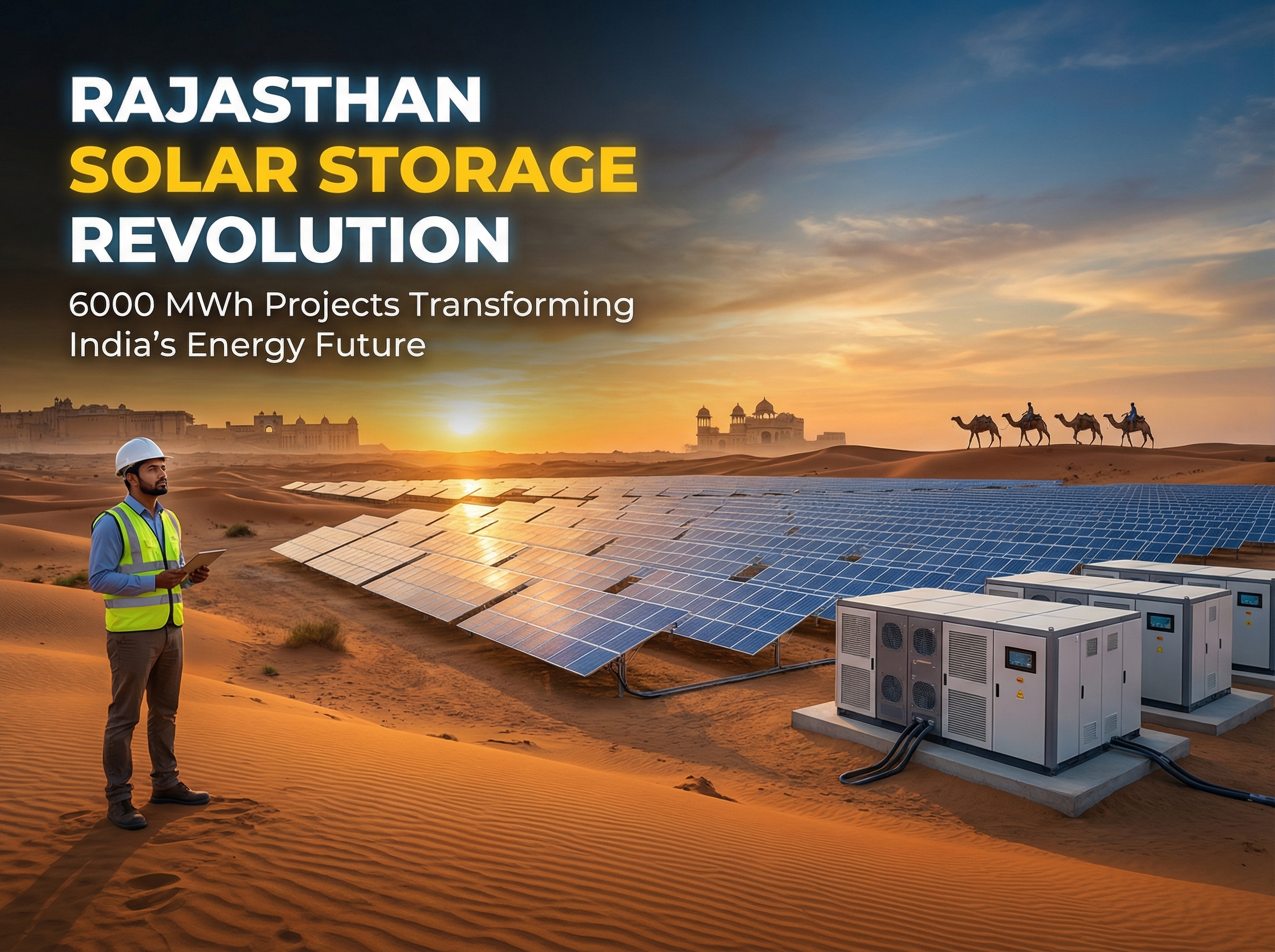
Recently, the Rajasthan government directed officials to ensure that solar battery storage projects with a combined capacity of 6000 MWh are made operational by September 2026. This development is not just another policy announcement. It represents a crucial shift in how India plans to generate, store, and distribute clean energy in the coming years.
Solar energy has always been seen as the future, but it comes with a limitation it is only available when the sun shines. During the day, solar panels often generate more electricity than needed, while in the evening, when demand increases, solar generation drops to zero. This mismatch between supply and demand has been a major barrier to fully relying on solar power. Rajasthan’s new initiative directly addresses this issue by focusing on large-scale battery storage systems that can store excess energy and release it when required.
Battery Energy Storage Systems, often referred to as BESS, are at the core of this transformation. These systems allow electricity generated during peak sunlight hours to be stored and then used later, especially during nighttime or periods of high demand. This ensures a continuous and stable power supply, making renewable energy far more reliable than before. With 6000 MWh of storage capacity planned, Rajasthan is setting a benchmark not just for India but for global renewable energy projects as well.
The importance of this initiative becomes even clearer when we consider the scale of solar expansion happening in India. Over the past decade, solar capacity has grown rapidly, driven by government policies, falling costs, and increasing environmental awareness. However, without adequate storage, a significant portion of solar energy can go unused or put pressure on the grid. This is where energy storage becomes essential it acts as a bridge between generation and consumption.
Rajasthan’s decision also highlights a broader shift in energy strategy. Instead of focusing only on generating more renewable energy, governments are now investing in infrastructure that ensures this energy can be used efficiently. This includes not only battery storage but also improved transmission networks and smarter grid systems. By prioritizing storage, Rajasthan is taking a more holistic approach to energy management.
From an economic perspective, this move is expected to create significant opportunities. Large-scale storage projects require investment, technology, and skilled labor, which means job creation across multiple sectors. Engineers, technicians, project managers, and construction workers will all play a role in bringing these projects to life. Additionally, the demand for advanced battery technologies will likely attract both domestic and international companies, boosting the local economy.
For businesses and industries, the impact could be transformative. One of the biggest challenges for industries in India has been inconsistent power supply. With reliable solar storage systems in place, companies can access stable and cost-effective electricity. This not only reduces operational costs but also helps businesses meet their sustainability goals. As more companies commit to reducing their carbon footprint, access to clean and reliable energy becomes a major advantage.
Consumers, too, stand to benefit in multiple ways. Improved grid stability means fewer power cuts and a more consistent electricity supply. Over time, the cost of electricity could also decrease as solar power becomes more efficiently utilized. In rural and remote areas, where power availability has traditionally been a challenge, energy storage systems can ensure better access to electricity, improving quality of life and supporting economic development.
Environmentally, the benefits are equally significant. By enabling greater use of solar energy, battery storage reduces dependence on fossil fuels such as coal. This leads to lower greenhouse gas emissions and contributes to India’s climate goals. As the country works toward achieving its renewable energy targets, initiatives like this will play a crucial role in reducing environmental impact.
However, implementing such large-scale projects is not without challenges. One of the primary concerns is the high initial cost of battery storage systems. While costs have been decreasing over time, large investments are still required to set up infrastructure of this scale. Land acquisition and regulatory approvals can also slow down progress if not managed efficiently. Additionally, integrating new storage systems with existing power grids requires advanced technology and careful planning.
Despite these challenges, the Rajasthan government appears committed to ensuring timely execution. Officials have been instructed to remove bottlenecks and closely monitor project progress. This level of focus and accountability is essential for the success of such ambitious initiatives. If executed properly, these projects could serve as a model for other states and even other countries.
Another important aspect to consider is the role of technology. Advances in battery technology are making energy storage more efficient and affordable. Lithium-ion batteries currently dominate the market, but new technologies are being विकसित that could offer even better performance in the future. At the same time, smart grid systems and artificial intelligence are being used to optimize energy distribution, ensuring that stored power is used in the most efficient way possible.
Looking ahead, the combination of solar energy and battery storage is likely to become the standard for power systems around the world. As renewable energy sources continue to grow, the need for storage will only increase. Rajasthan’s initiative is a clear indication that India is preparing for this future. By investing in storage infrastructure today, the state is ensuring that it can fully leverage its renewable energy potential in the years to come.
This development also opens up new opportunities for entrepreneurs and startups. The growing demand for solar and storage solutions creates space for innovation in areas such as installation services, maintenance, energy management, and battery recycling. Entrepreneurs who enter this space early could benefit from the rapid growth of the renewable energy sector.
At a broader level, this initiative reflects a shift in how energy systems are being designed. Traditional power systems were built around centralized generation, often relying on fossil fuels. In contrast, modern systems are moving toward decentralized, renewable-based models that are more flexible and sustainable. Energy storage plays a key role in this transition by enabling a more balanced and resilient power grid.
The significance of Rajasthan’s 6000 MWh storage plan goes beyond numbers. It represents a commitment to building a future where clean energy is not just available but also reliable and accessible. It shows that renewable energy is no longer an alternative it is becoming the foundation of modern power systems.
In conclusion, Rajasthan’s push to operationalize large-scale solar storage projects by September 2026 marks a turning point in India’s renewable energy journey. By addressing the challenge of energy storage, the state is unlocking the full potential of solar power and setting an example for others to follow. The benefits of this initiative will be felt across the economy, from businesses and consumers to the environment and future generations.
Entrepreneurs looking to enter this sector can explore opportunities in the growing market, as explained in this guide on solar business opportunities in India.
As India continues to move toward a cleaner and more sustainable energy future, projects like these will play a defining role. Rajasthan is not just generating solar power it is building the infrastructure needed to make that power truly usable. And in doing so, it is helping shape the future of energy in India.
Also Read : India Renewable Energy Growth 2026: Solar Power Drives Over 26% Electricity Generation