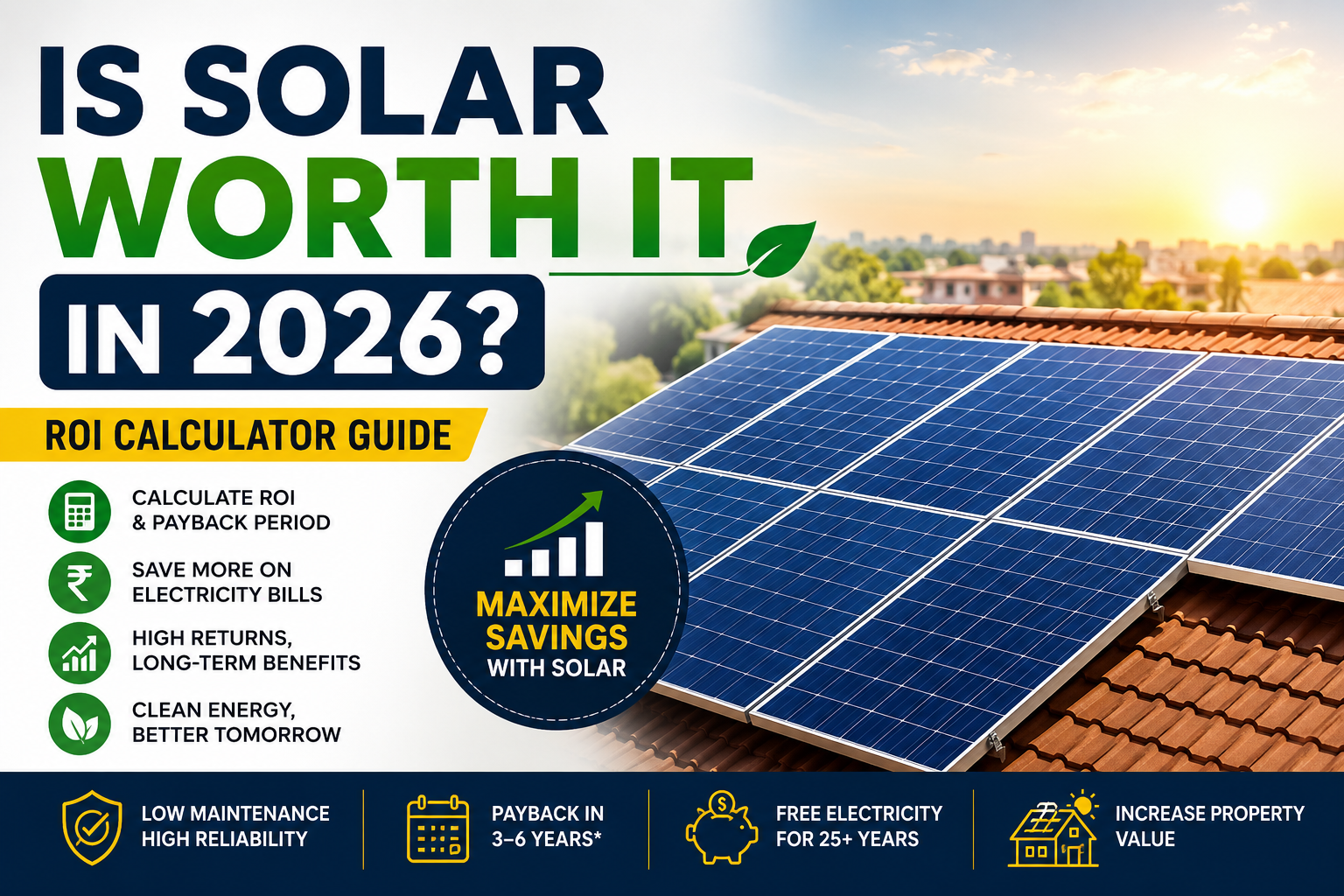
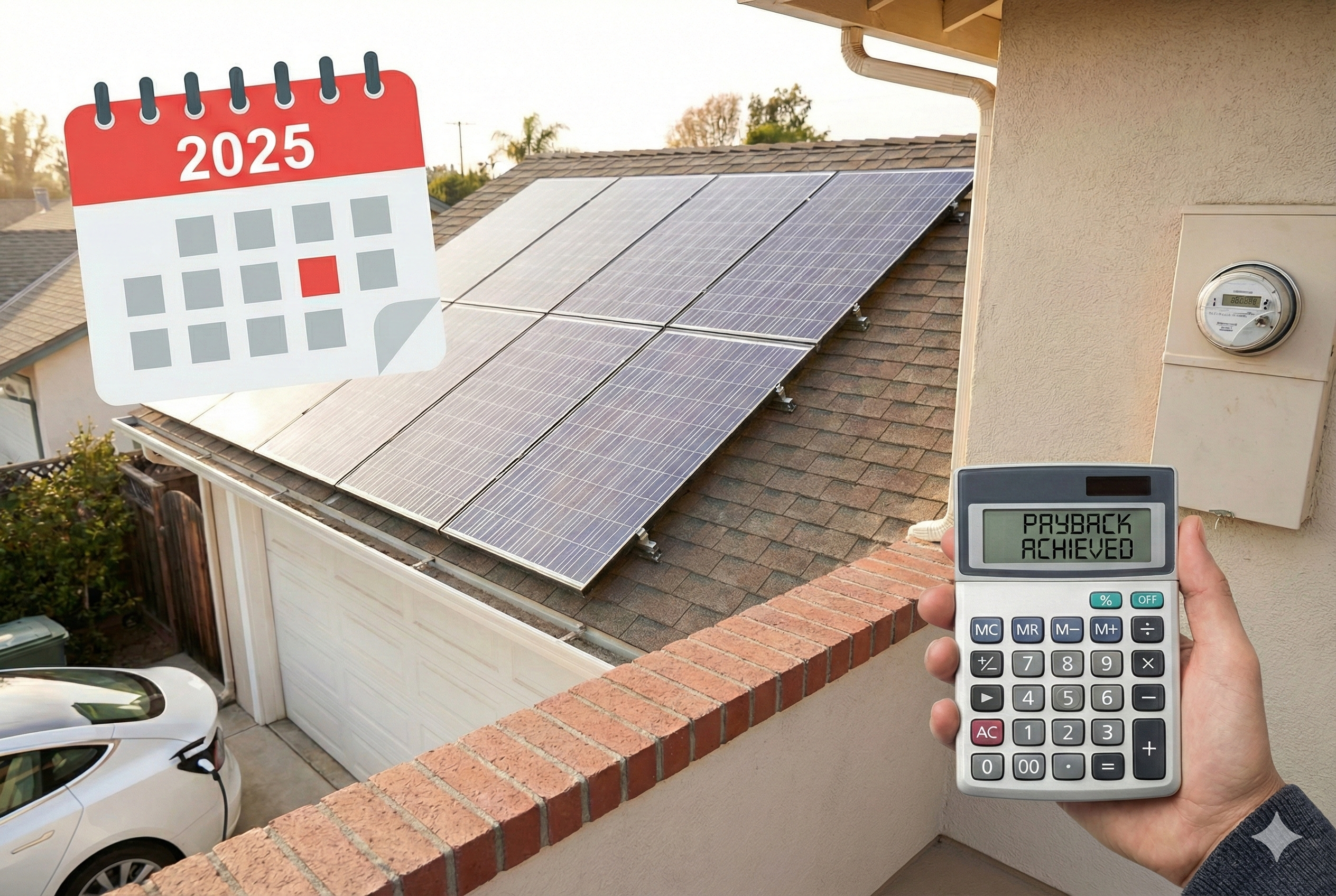
The payback period of solar is one of the most important questions homeowners and businesses ask before installing a solar power system. In 2025, with rising electricity tariffs, improved solar technology, and strong government support, solar energy has become one of the smartest long-term investments in India. However, understanding how long it actually takes to recover your investment helps you make an informed decision.
In simple terms, the payback period tells you how many years it will take for the money saved on electricity bills to equal the total cost of your solar system. After this point, the electricity your solar panels generate is essentially free, apart from minimal maintenance costs. For most users in 2025, this payback period is shorter than ever before.
What Does the Payback Period of Solar Mean?
The payback period of solar refers to the time required for your solar energy system to recover its installation cost through electricity savings. If your system costs ₹5 lakh and saves ₹1 lakh per year on power bills, the payback period is approximately five years.
This concept is important because solar panels typically last 25 years or more. Once the payback period is over, the remaining years translate directly into financial savings. In 2025, most solar systems in India recover their cost well before reaching half of their operational life.
Average Solar Payback Period in 2025
In 2025, the average payback period of solar in India generally falls within the following range:
- Residential solar systems: 4 to 7 years
- Commercial and industrial systems: 3 to 5 years
This improvement compared to earlier years is due to falling solar panel prices, better efficiency, higher electricity costs, and supportive government policies. For households with higher electricity consumption, the payback period can be even shorter.
Urban areas with high electricity tariffs often experience faster payback, while regions with lower tariffs may take slightly longer. However, in almost all cases, solar remains financially beneficial over the system’s lifetime.
Factors That Affect the Payback Period of Solar
The payback period of solar is not the same for everyone. Several factors influence how quickly your investment is recovered.
Electricity Tariffs
The higher your electricity bill, the faster your solar system pays for itself. As grid electricity prices continue to rise in India, solar users benefit from increasing annual savings.
Solar System Cost
The upfront cost depends on system size, panel quality, inverter type, and installation standards. While cheaper systems may reduce initial investment, high-quality components often deliver better performance and reliability, improving long-term returns.
Government Subsidies and Net Metering
Subsidies significantly reduce the initial cost for residential solar users. Net metering allows you to export excess electricity to the grid, earning credits that further shorten the payback period.
Location and Sunlight Availability
Regions with higher solar irradiation generate more electricity, increasing savings. However, even areas with moderate sunlight achieve favourable payback due to efficient modern panels.
Maintenance and Performance
Solar systems require minimal maintenance, but regular cleaning and proper installation ensure optimal output, directly impacting savings and payback time.
How to Calculate the Payback Period of Solar
Calculating the payback period of solar is straightforward. First, determine the total cost of installation, including panels, inverter, mounting structure, wiring, and installation charges. Next, subtract any applicable subsidies to find the net investment.
Then, estimate annual electricity generation based on system size and location. Multiply this generation by your electricity tariff to calculate yearly savings. Finally, divide the net system cost by annual savings.
For example, if your solar system costs ₹6 lakh, and you receive a subsidy of ₹50,000, your net investment becomes ₹5.5 lakh. If your annual electricity savings are ₹90,000, the payback period is just over six years. After this, all further savings contribute directly to your profit.
Solar Return on Investment Beyond Payback
While the payback period of solar shows when you break even, the real value lies in long-term returns. A typical solar system operates efficiently for 25 years or more. If your payback period is six years, you still enjoy nearly two decades of free or low-cost electricity.
This translates into savings that can be several times the original investment. Additionally, solar protects you from future electricity price hikes, making your household or business energy costs more predictable.
Is Solar Worth It in 2025?
From a financial perspective, solar energy in 2025 is more attractive than ever. Rising power costs, declining solar prices, and strong policy support combine to create a favourable investment environment. The payback period of solar is now short enough to make solar a practical option for middle-income households as well as commercial users.
Beyond savings, solar also increases property value, reduces carbon emissions, and supports energy independence. These non-financial benefits further enhance the overall return on investment.
Common Misunderstandings About Solar Payback
Many people believe that solar takes decades to recover its cost. This was partly true in the early days of solar adoption, but in 2025, technology advancements have drastically reduced payback periods.
Another misconception is that solar is only viable in very sunny regions. Modern solar panels perform well even in moderate sunlight, ensuring steady returns across most parts of India.
Some also worry about maintenance costs affecting savings. In reality, solar systems require minimal upkeep, and maintenance expenses are negligible compared to the savings generated.
How to Reduce Your Solar Payback Period
There are simple ways to shorten your payback period. Choosing the right system size based on your consumption ensures maximum utilisation. Using energy-efficient appliances increases the percentage of solar power used directly, boosting savings.
Proper installation angle, orientation, and regular panel cleaning also improve performance. Opting for reliable components with strong warranties ensures consistent output over time, reducing unexpected costs.
Conclusion
The payback period of solar in 2025 makes solar power one of the smartest energy investments available in India today. With average payback periods ranging between four and seven years and system lifespans exceeding 25 years, solar offers long-term financial security and sustainable energy benefits.
For homeowners and businesses alike, investing in solar is no longer just an environmental choice—it is a financially sound decision that delivers reliable savings year after year. As electricity prices continue to rise, the value of solar will only grow stronger.
In India, government support through rooftop solar subsidy schemes has significantly reduced the initial installation cost for residential users. https://mnre.gov.in/solar/rooftop-solar
Also Read : How Net Metering Reduces Your Bill — Step-by-Step